Author Archives: wpadmin

What Happens If I Hire an Unlicensed Contractor to Remove My Asbestos Popcorn Ceiling in Florida?

What Happens If I Hire an Unlicensed Contractor to Remove My Asbestos Popcorn Ceiling in Florida?

Hiring an unlicensed contractor to remove an asbestos popcorn ceiling in Florida can lead to serious health, legal, and financial risks.

Many homes built before the late 1980s may contain asbestos in textured ceiling materials. When disturbed through improper scraping, these materials can release airborne asbestos fibers that spread through living spaces and HVAC systems.

Suspect materials should always remain undisturbed until properly inspected and tested by qualified professionals. This article explains the risks of improper removal, federal and Florida-enforced compliance requirements, and how EPAC Environmental Services, Inc. can support safe environmental assessment and guidance.

👉Also Read: Is It Possible to Sell a Contaminated Property in Pompano Beach, FL?

What Is an Asbestos Popcorn Ceiling and Why Is It Dangerous in Florida Homes?

Popcorn ceilings, also known as acoustic or “cottage cheese” ceilings, were commonly used in residential construction from the 1950s through the early 1980s. They were installed for sound absorption, fire resistance, and to help conceal surface imperfections.

Many popcorn ceilings installed before the mid-1980s may contain asbestos, as asbestos was a common additive in some textured ceiling materials during that period.

Asbestos becomes a health hazard when the material is disturbed through activities such as repairs, renovations, scraping, drilling, water damage, or natural deterioration. When disturbed, microscopic asbestos fibers can become airborne and may be inhaled. Prolonged exposure is associated with serious diseases, including asbestosis, mesothelioma, and lung cancer.

In Florida homes, ceilings installed before the 1980s should be treated with caution, especially if they are original and have not been tested. Visual inspection alone cannot confirm the presence of asbestos.

The only reliable way to determine whether a popcorn ceiling contains asbestos is through laboratory analysis of a properly collected sample. Professional asbestos inspection and testing are strongly recommended, since improper sampling can release asbestos fibers and increase exposure risk.

Are Contractors Legally Required to Be Licensed for Asbestos Removal in Florida?

Yes. In Florida, asbestos abatement work performed for hire is regulated, and contractors must be properly licensed under Florida Statutes Chapter 469 (Asbestos Abatement). This law is administered through the Florida Department of Business and Professional Regulation (DBPR) and requires certification, training, and compliance with state asbestos handling standards.

Licensed asbestos contractors are required for regulated asbestos abatement activities, particularly in commercial buildings, public facilities, and other covered projects where asbestos-containing materials are disturbed.

In addition to state law, federal regulations also apply:

  • The U.S. Environmental Protection Agency (EPA) regulates asbestos under the National Emission Standards for Hazardous Air Pollutants (NESHAP), which establishes strict requirements for demolition, renovation, containment, and disposal practices when asbestos is present.
  • The Occupational Safety and Health Administration (OSHA) sets workplace safety standards, including exposure limits, respiratory protection requirements, and mandatory safe work practices for workers handling asbestos-containing materials.

Licensed asbestos professionals are trained to:

  • Identify and assess asbestos-containing materials
  • Implement proper containment and control measures
  • Use required personal protective equipment (PPE)
  • Follow regulated removal and decontamination procedures
  • Transport and dispose of asbestos waste in compliance with hazardous waste regulations and documentation requirements

Using unlicensed or improperly trained contractors for regulated asbestos abatement can create serious health risks, regulatory violations, and potential legal liability.

What Are the Immediate Risks of Hiring an Unlicensed Contractor in Florida?

Unlicensed or unqualified individuals may use improper asbestos handling methods, such as dry scraping, using standard household vacuums, failing to use HEPA filtration, or not properly sealing off the work area. Proper asbestos abatement requires strict containment, including sealing the work zone, using wet methods to reduce fiber release, and employing HEPA-filtered equipment for cleanup.

When these controls are not followed, asbestos-containing dust can spread beyond the work area through air movement, HVAC systems, doorways, and porous materials such as carpets and furniture. In multi-unit buildings such as condos or apartments, improperly controlled work can also increase the risk of cross-contamination between units through shared ventilation or building airflow pathways.

Improper disturbance of asbestos materials can significantly increase airborne fiber concentrations. Studies and regulatory guidance consistently show that unsafe handling practices can elevate exposure levels many times above normal background levels, which is why regulated asbestos abatement procedures are required under EPA and OSHA standards.

What Are the Long-Term Health Consequences of Improper Asbestos Removal?

Health effects from asbestos exposure often have a long latency period and may not appear until 10 to 40 years after exposure. Diseases associated with asbestos exposure include mesothelioma, asbestosis, and lung cancer, which are well-documented in occupational health literature.

Risk levels can be higher for individuals with prolonged or repeated exposure. Children, older adults, and people with pre-existing respiratory conditions such as asthma or COPD may be more vulnerable to the effects of airborne irritants, including asbestos fibers.

Improper asbestos removal can also leave behind contaminated dust and debris. These residues may become a secondary exposure source if disturbed later during cleaning, renovation, or movement of materials, allowing previously settled fibers to become airborne again.

What Are the Legal Consequences and Liability for Florida Property Owners?

Asbestos violations can result in federal and state civil penalties that may reach tens of thousands of dollars per violation per day, depending on the severity and enforcement action under EPA NESHAP rules.

Property owners may also be held financially responsible for cleanup costs and damages if asbestos contamination occurs due to unlicensed or improper work, including claims from tenants, buyers, workers, or nearby properties.

Insurance coverage may not apply if asbestos work is performed improperly or by unlicensed contractors.

Property owners should keep:

  • Inspection and testing reports
  • Licensed abatement records
  • Waste disposal manifests
  • Clearance and air quality results

Financial Impact: When “Cheap” Asbestos Removal Becomes Expensive in Florida

Low-cost or improper asbestos removal can lead to significantly higher expenses later, including professional decontamination, air quality testing, hazardous waste disposal, HVAC cleaning, drywall or flooring replacement, and post-remediation clearance certification.

If asbestos-containing materials are disturbed in enclosed or concealed areas such as wall cavities or attics, fibers may spread beyond the initial work zone. This can extend the cleanup scope and delay safe re-occupancy until clearance testing confirms the area meets regulatory safety standards.

Improper or non-compliant asbestos work may also affect property transactions. In Florida, disclosure of known contamination or undocumented removal can reduce buyer confidence and may impact property value, particularly in older buildings where lenders, insurers, and inspectors often require environmental due diligence.

What Are the Real Estate and Disclosure Issues in Florida?

A home inspector is examining an older textured ceiling, commonly known as a popcorn ceiling, using a flashlight to identify any potential asbestos-containing materials. This careful inspection is crucial due to the serious health risks associated with asbestos exposure, particularly in homes built before the 1980s.

In Florida, sellers are generally required to disclose known material defects that could affect the value or safety of a property, including environmental conditions when they are known and material to the transaction.

If buyers discover that popcorn ceilings were removed without proper asbestos testing, required permits (where applicable), or documented clearance procedures, it may lead to renegotiation of price, repair requests, or delays during closing. These issues are more likely to arise when concerns are identified during inspections or due diligence by lenders, insurers, or home inspectors.

This applies to residential, rental, and commercial properties. In some cases, lenders and insurance providers may request documentation showing that asbestos-containing materials were properly tested and handled by qualified professionals, particularly in older buildings where asbestos-containing materials were commonly used before regulatory restrictions.

How Does Environmental Contamination Lead to Regulatory Involvement?

Asbestos fibers can become airborne when disturbed and may spread beyond the immediate work area through air movement, including into adjacent rooms, hallways, stairwells, and shared ventilation systems.

If there is suspected improper or unlicensed asbestos work, concerns may be raised by property occupants, inspectors, or third parties, which can lead to involvement from environmental or public health authorities, depending on the situation and jurisdiction.

Regulatory response, when warranted, may include inspection, sampling, risk assessment, and requirements for remediation and clearance testing before the area is deemed safe for re-occupancy. Environmental testing is commonly used to determine the extent of any contamination and to guide appropriate cleanup actions.

👉Also Read: Asbestos Remediation Waste Disposal in Florida: How to Properly Dispose of ACM

How Licensed Florida Asbestos Professionals Handle Removal Safely

Licensed asbestos professionals begin by conducting inspections and, when required, collecting samples for laboratory analysis to confirm the presence of asbestos-containing materials.

If asbestos is confirmed in materials such as popcorn ceilings, several regulated management options may be considered depending on the condition of the material, including encapsulation, enclosure (encasement), or full removal. Full removal is typically the most complex option and requires strict regulatory controls.

During removal, licensed crews implement controlled procedures such as sealing the work area, restricting airflow, and using negative air pressure systems to prevent fiber migration. Wet methods are used to reduce dust, and workers wear appropriate respirators and protective clothing. HEPA-filtered equipment is used for air cleaning and debris control, and waste is placed in approved, sealed containers for regulated disposal.

After completion, clearance testing is performed to verify that airborne fiber levels and surface conditions meet required safety standards before the area is approved for re-occupancy.

How to Verify a Contractor’s Credentials Before Hiring in Florida

Ask for:

  • Current Florida asbestos contractor license number
  • Proof of worker training and insurance
  • Pollution liability and workers’ compensation coverage
  • Written scope for testing, containment, disposal, and clearance
  • Recent references involving asbestos popcorn ceilings

Red flags include “skip the testing,” “I can tell if your popcorn is safe by looking,” or “many popcorn ceilings never contain asbestos.” You cannot identify asbestos by sight.

When Florida Property Owners Should Call an Environmental Consultant

Florida property owners should consider contacting an environmental consultant before renovating older buildings, purchasing or selling a property with potential environmental concerns, or disturbing materials that may contain asbestos (in popcorn ceilings). Professional guidance is also valuable after water damage, fire damage, suspected contamination, or unlicensed renovation work that may have affected hazardous materials.

Environmental consultants can help identify potential risks through inspections, testing, and regulatory reviews. They also provide documentation that may be important for insurance claims, real estate transactions, lender requirements, and regulatory compliance.

For properties such as apartments, condominiums, office buildings, schools, warehouses, industrial facilities, and older homes, early environmental assessment can help prevent costly surprises and ensure that any environmental concerns are addressed safely and in accordance with applicable Florida requirements.

👉Also Read: Abatement or Remediation: What Pompano Beach Homeowners Should Ask Their Environmental Consultant

Protect Your Florida Property Before Asbestos Becomes a Costly Problem

If you suspect your popcorn ceiling may contain asbestos, do not rely on assumptions or unlicensed contractors. Disturbing asbestos-containing materials without proper testing and controls can create serious health risks, regulatory issues, expensive cleanup costs, and complications during future property transactions.

EPAC Environmental Services, Inc. has been serving Florida since 1987, providing asbestos inspections, laboratory testing coordination, environmental assessments, and regulatory guidance for residential, commercial, industrial, and government properties. Our team helps property owners identify potential asbestos hazards, understand their options, and obtain the documentation needed to support compliance and informed decision-making.

Whether you are planning a renovation, purchasing an older property, responding to suspected improper removal, or simply want peace of mind before disturbing a textured ceiling, we can help. Contact EPAC Environmental Services, Inc. today at (954) 974-7055 to schedule a professional asbestos assessment and receive clear, reliable guidance tailored to your Florida property.

Frequently Asked Questions

Can I legally remove an asbestos popcorn ceiling myself in my own Florida home?

Florida asbestos regulations can vary depending on the type of property and the scope of work. While some owner-occupied residential situations may be treated differently from commercial, public, or multi-unit properties, asbestos removal can still involve important safety, handling, transportation, and disposal requirements. Before attempting any removal, property owners should verify current state and local requirements and consider professional asbestos testing and consultation.

How can I tell if my Florida popcorn ceiling has asbestos?

You cannot determine whether a popcorn ceiling contains asbestos through visual inspection alone. The age of the ceiling may indicate a higher likelihood of asbestos-containing materials, but laboratory analysis of a properly collected sample is the only reliable way to confirm whether asbestos is present.

What should I do if an unlicensed contractor has already scraped my popcorn ceiling?

Stop all work immediately and avoid sweeping, dusting, or using standard household vacuums. Turn off HVAC systems if it can be done safely, restrict access to the area, and contact a qualified asbestos professional. Environmental testing and a site assessment can help determine whether contamination is present and what remediation measures may be necessary.

Does painting over an asbestos-containing popcorn ceiling make it safe?

Painting or encapsulating an asbestos-containing ceiling may help reduce fiber release if the material is in good condition and remains undisturbed. However, painting does not remove asbestos and is not appropriate in every situation. A qualified asbestos professional can determine whether encapsulation, enclosure, or removal is the most appropriate management option.

How often should I test for asbestos if I own an older Florida property?

Asbestos testing is generally recommended before renovation, demolition, major repairs, or any activity that could disturb suspect materials. If previous testing and documentation already exist and the materials remain undisturbed, additional testing may not be necessary unless new areas are exposed, damaged, or affected by water intrusion or deterioration.

10 Red Flags That Trigger a Phase 2 ESA After Your Florida Property Inspection

A Phase II Environmental Site Assessment (ESA) is a more detailed environmental investigation performed when a Phase I ESA identifies potential contamination concerns. Unlike a Phase I ESA, which relies on records reviews, site inspections, and interviews, a Phase II ESA involves environmental testing such as soil borings, groundwater sampling, soil gas testing, and laboratory analysis to determine whether contamination is present.

Phase II ESAs are commonly triggered when a Phase I ESA identifies Recognized Environmental Conditions (RECs). RECs are signs of potential contamination related to a property’s current or historical use, such as former gas stations, dry cleaners, industrial operations, chemical storage, or evidence of spills and leaks. The Phase I ESA process follows ASTM E1527-21 standards and the EPA’s All Appropriate Inquiries (AAI) rule, which may help buyers and lenders qualify for certain liability protections under CERCLA.

In Florida, Phase II ESAs are often conducted in accordance with ASTM standards and applicable Florida Department of Environmental Protection (FDEP) regulations. While a Phase II ESA is not always the same as a formal regulatory site assessment under Chapter 62-780, F.A.C., its findings may later support regulatory compliance, remediation planning, or additional environmental investigation if contamination is discovered.

If your Phase I ESA identified potential environmental concerns, EPAC Environmental Services, Inc. can help you move forward with confidence. Our team performs Phase II Environmental Site Assessments throughout Florida, including soil, groundwater, and vapor testing designed to identify contamination risks and support informed property decisions.

With decades of environmental consulting experience, we provide clear reporting, efficient turnaround times, and reliable guidance for property owners, buyers, lenders, and developers. Contact EPAC Environmental Services, Inc. today at (954) 974-7055 to discuss your Florida Phase II ESA needs.

👉Also Read: Abatement or Remediation: What Pompano Beach Homeowners Should Ask Their Environmental Consultant

10 Red Flags That Trigger a Phase II ESA in Florida

These red flags are commonly identified during site inspections, historical records reviews, topographic map analysis, review of city directories, interviews with current or former property owners, and environmental database searches related to the subject property.

1. History of Underground Storage Tanks (USTs)

Underground storage tanks associated with former gas stations, heating oil systems, or waste-oil operations are common Recognized Environmental Conditions (RECs). Site inspections may reveal vent pipes, fill ports, dispenser islands, or patched pavement that suggest the presence of former petroleum or fuel tanks. Historical records can also uncover prior operations involving USTs that may have resulted in releases. For example, a former Tampa gas station later converted into a restaurant may still require Phase II sampling if closure documentation or cleanup records are incomplete.

2. Nearby Gas Stations or Auto Repair Facilities

Nearby gas stations, auto repair facilities, or industrial operations may create environmental concerns for adjacent properties. Petroleum hydrocarbons, solvents, waste oil, and benzene can migrate through soil or groundwater under certain conditions. In parts of Florida with sandy soils and shallow groundwater tables, contamination may move beyond the source area, increasing the need for additional investigation.

3. Documented Spills or Environmental Incidents

Environmental database reviews may reveal reported spills, enforcement actions, unresolved contamination cases, or open cleanup sites associated with the property. Records from the Florida Department of Environmental Protection (FDEP), EPA, or local agencies may identify diesel spills, petroleum releases, or incomplete remediation efforts. In these situations, lenders and buyers often request a Phase II ESA to evaluate the extent of potential contamination and associated environmental liability.

4. Industrial or Manufacturing Use

Properties previously used for industrial or manufacturing purposes are frequently flagged for additional environmental testing. Operations such as metal plating, printing, boat repair, degreasing, and chemical storage may leave behind hazardous substances, petroleum products, metals, or chlorinated solvents. Even historical industrial activity can impact soil and groundwater conditions decades later.

5. Unusual Soil Staining or Odors Observed During Inspection

Visible staining, oily residue, chemical odors, stressed vegetation, or unusual discoloration during a site inspection may indicate potential contamination. Environmental professionals also look for signs such as sheens on standing water, distressed pavement, or evidence of prior spills. These conditions may warrant soil or groundwater testing as part of a Phase II ESA.

6. Presence of Hazardous Materials Storage On-Site

Abandoned drums, corroded containers, chemical storage areas, or evidence of improper waste handling can indicate potential environmental concerns. Materials such as solvents, pesticides, acids, and petroleum products may create contamination risks if spills or leaks occur. Older industrial or mechanical areas with floor drains or unregulated drainage systems may also require further investigation.

7. Dry Cleaners or Chemical-Intensive Businesses Nearby

Former dry cleaners and chemical-intensive businesses are common environmental concern sites because they historically used chlorinated solvents such as perchloroethylene (PCE). These chemicals can persist in soil and groundwater for years and may also create vapor intrusion concerns. Properties near former dry cleaners, print shops, or chemical processing facilities are often candidates for soil, groundwater, or soil gas testing.

8. Fill Material of Unknown Origin

Unknown fill material, demolition debris, ash, slag, or imported soil may contain hazardous substances or construction-related contaminants. Phase II testing may evaluate fill materials for metals, petroleum compounds, PAHs, asbestos-containing debris, or other environmental concerns that could affect redevelopment plans or property value.

9. Regulatory Database Listings

Properties listed in FDEP storage tank, brownfield, RCRA, or environmental cleanup databases may present elevated environmental risk. Database listings can indicate historical contamination, ongoing remediation, or regulatory oversight tied to the property or nearby sites. Because Florida has a long history of regulated petroleum storage systems, database reviews are an important part of environmental due diligence.

10. Evidence of Mold, Asbestos, or Other Building Contaminants

Mold, asbestos-containing materials, lead-based paint, and PCB-containing equipment are generally considered non-scope items under ASTM E1527-21 Phase I ESA standards. However, these materials can still affect financing, redevelopment, occupancy, or property management decisions. Additional environmental inspections or building surveys are often recommended for older Florida buildings where these concerns may be present.

👉Also Read: Is It Possible to Sell a Contaminated Property in Pompano Beach, FL?

Why These Red Flags Matter in Florida Specifically

Florida’s sandy soils, shallow groundwater, coastal development, and flooding risks can increase the spread of environmental contamination. In some areas, petroleum products and hazardous chemicals may move through soil and groundwater more quickly than in other regions.

FDEP regulations, lender requirements, and redevelopment concerns also influence Phase me and Phase II ESAs in Florida. Environmental findings may affect property value, financing, insurance, or real estate transactions if contamination risks are identified.

What Happens After a Phase I Environmental Site Assessment Red Flag Is Identified?

If a Phase I ESA reveals potential environmental concerns, such as historical land use that may have involved hazardous substances, a Phase II ESA is warranted to confirm the presence of contamination through sampling and analysis.

The consultant explains the findings, the lender evaluates the risk, and a qualified environmental professional prepares a targeted Phase II scope of work. This work may include soil borings, monitoring wells, soil gas points, groundwater sampling, and laboratory analysis. Most small projects take 3–6 weeks to complete, including laboratory turnaround times.

👉Also Read: 10 Questions to Ask Environmental Consulting Companies in Fort Lauderdale Before You Hire

Can You Still Buy or Sell a Commercial or Industrial Property After a Phase II Environmental Site Assessment?

Yes. Phase II findings may lead to remediation, escrow, indemnity, insurance review, price adjustments, or a “no further investigation” determination. Clear reports help buyers manage future risks and unexpected environmental liabilities instead of guessing.

How to Minimize Risk Before It Becomes a Problem

Start environmental due diligence early. Review the property’s environmental history before listing or purchasing. Maintain tank, drum, spill, and closure records. A comprehensive evaluation by an environmental professional can reduce uncertainty and help structure the ESA process.

Work With an Environmental Consultant Who Understands Florida Properties

An environmental consultant is conducting a site inspection near the exterior of a warehouse in Florida, reviewing soil and groundwater samples to assess potential environmental risks and existing contamination liabilities. This evaluation is part of a phase II environmental site assessment aimed at identifying recognized environmental conditions that may impact the property's environmental status.

A local environmental consultant understands Florida hydrogeology, environmental regulations, FDEP expectations, and practical risk assessment. Strong reporting helps attorneys, lenders, and owners interpret the property’s environmental condition without delay.

Protect Your Investment with EPAC Environmental Services, Inc.

Don’t let unexpected environmental issues derail your next real estate transaction. Since 1987, EPAC Environmental Services, Inc. has built a proven track record of providing accurate, timely, and budget-conscious environmental consulting across Florida.

We help buyers, sellers, and developers navigate complex risks with comprehensive services, including:

  • Phase I Environmental Site Assessments
  • Phase II Investigations
  • Mold & Asbestos Surveys
  • Indoor Air Quality Assessments
  • Site Investigations for Commercial and Industrial Properties

Identify potential environmental liabilities before you buy, sell, or redevelop. Contact EPAC Environmental Services, Inc. today at (954) 974-7055 to schedule your assessment and keep your project moving forward without delay.

Frequently Asked Questions

How does a Phase II ESA differ from a DEP Site Assessment Report?

A Phase II ESA is private due diligence for transactions. A DEP Site Assessment Report is a regulatory document used when formal cleanup proceeds under FDEP rules; Phase II data may support it.

Who usually pays for a Phase II Environmental Assessment in Florida?

Buyers often pay because the information protects their acquisition decision. Sellers may share costs to keep a closing on schedule, especially when financing depends on the results.

How long are Phase I and Phase II reports valid?

Under the EPA’s All Appropriate Inquiries (AAI) guidance, key Phase I components become stale after 180 days, and full updates are generally needed after one year. Older Phase II data may need to be reviewed if operations, storms, or nearby uses have changed.

What if Phase II results are clean?

If samples are below Florida Cleanup Target Levels (CTLs), the consultant may recommend no further investigation from an ESA perspective. The clean report becomes valuable baseline documentation for future refinancing or sale.

How Often Should Double-Lined Fuel Tanks Be Cleaned in Pompano Beach, and Who Should You Hire?

How Often Should Double-Lined Fuel Tanks Be Cleaned in Pompano Beach, and Who Should You Hire?

Commercial buildings, marinas, and critical facilities across Pompano Beach depend on double-wall fuel storage systems for diesel and gasoline. While this design provides secondary containment and important safety benefits, it does not eliminate the need for scheduled cleaning and maintenance.

South Florida’s high humidity, salt air, frequent storms, and daily temperature swings accelerate condensation, corrosion, and fuel degradation inside tanks. Cleaning intervals typically run every one to three years, with fuel-quality testing and inspections at least annually, more frequently for mission-critical systems.

EPAC Environmental Services, Inc. provides comprehensive fuel tank maintenance, cleaning, and fuel polishing services tailored to South Florida conditions. Our team works with commercial properties, marinas, and critical facilities to keep fuel systems operating safely, efficiently, and in line with regulatory expectations.

Do not wait for costly failures or downtime. Contact EPAC Environmental Services, Inc. today at (954) 974-7055 to schedule a professional assessment and ensure your fuel storage system remains reliable year-round.

👉Also Read: Is Your Fuel Tank Leaking? How Early Detection Systems Prevent Environmental Contamination & Costly Fuel Tank Repairs in Florida

What Is a Double-Lined Fuel Tank?

A double-lined fuel tank features an inner tank that holds fuel, surrounded by an outer wall —typically fiberglass-reinforced plastic (FRP) in newer installations or carbon steel in older systems—creating an interstitial space for leak monitoring. This secondary containment is designed to capture leaks and support compliance with EPA Spill Prevention, Control, and Countermeasure (SPCC) regulations and Florida Department of Environmental Protection (FDEP) requirements.

Common applications in Pompano Beach include backup generators for high-rises, hospital emergency power systems, marinas, and fleet refueling operations. The double-wall design, however, does not prevent moisture, sediment, or microbial growth from forming inside the inner tank — making internal cleaning essential.

Why Fuel Tank Cleaning Is Necessary

Even sealed systems experience internal contamination over time, particularly in coastal climates where humidity and salt air accelerate degradation.

Sediment and Sludge Accumulation: Diesel fuel naturally oxidizes, forming gums, varnish, and sludge that settle along the tank bottom. Corrosion on steel walls creates rust particles that mix with fuel. These materials accumulate over months and must be removed to maintain system integrity.

Water Contamination: Pompano Beach’s warm climate causes frequent condensation inside tanks. Water sinks to the bottom and supports microbial growth — commonly called “diesel bug” — which produces organic acids and slime that degrade fuel quality and accelerate corrosion. Professional cleaning removes accumulated water and treats existing microbial contamination.

Equipment and Operational Risk: Sludge-blocked filters can starve engines of fuel at the worst possible moment. Generator failures during hurricanes or marina pump failures during peak season are real, preventable risks that routine maintenance eliminates.

Environmental and Regulatory Exposure: Sludge and corrosion mask early signs of structural damage, increasing leak risk and potential SPCC violations. Property owners are responsible for maintaining tanks in a compliant condition with documented inspection and cleaning records.

How Often Should Double-Lined Fuel Tanks Be Cleaned?

Most fuel storage systems in Pompano Beach should be professionally cleaned every one to three years, with annual inspections confirming condition between cleaning cycles.

System Type Recommended Cleaning Interval
High-turnover commercial tanks Every 2–3 years
Standby generators Every 1–2 years
Critical systems (hospitals, data centers) Every 6–12 months
Marine facilities Every 12 months

Active-Use vs. Standby Systems

Active-use tanks with high fuel turnover stay fresher naturally, as fresh fuel continuously displaces older product. Standby generator tanks store fuel for extended periods with no movement, allowing contamination to build silently. These systems warrant annual professional inspections and cleaning every one to two years at a minimum.

What Factors Affect the Cleaning Frequency of Double-Lined Fuel Tanks?

  • Tank capacity and fuel turnover rate
  • Fuel type (diesel, gasoline, biodiesel blends)
  • Coastal location and salt air exposure
  • Tank age and prior contamination history
  • Inspection findings and filter change frequency

What Warning Signs Indicate Your Fuel Tank Needs Immediate Attention?

  • Cloudy or dark-colored fuel at the time of sampling
  • Unusually frequent filter replacements
  • Water detected in the bottom samples
  • Generator hard starts or failure to start
  • Strong varnish-like odors during fueling

What Regulatory and Compliance Considerations Apply to Fuel Tanks in Florida?

Florida regulates aboveground and underground storage tanks through FDEP rules and EPA SPCC requirements. Facilities with aggregate aboveground oil storage capacity greater than 1,320 gallons — or a single underground container exceeding 42,000 gallons — are subject to SPCC plan requirements. Property owners bear direct environmental liability for soil or groundwater contamination resulting from poorly maintained systems. Documented cleaning and inspection records demonstrate due diligence and are essential during regulatory audits.

What Happens During Professional Fuel Tank Cleaning?

A qualified contractor will typically perform the following as part of fuel tank cleaning services in Florida:

  1. Initial inspection and system evaluation
  2. Safe fuel removal and fuel polishing through multi-stage filtration
  3. Sludge and residue removal using high-pressure washing calibrated to the tank’s material and coating type
  4. Interior condition assessment for corrosion, pitting, and coating integrity
  5. Interstitial space and sensor verification (specific to double-wall systems)
  6. Fuel quality testing before returning the tank to service
  7. Post-service documentation, including findings, actions taken, and maintenance recommendations

Who Should You Hire for Fuel Tank Cleaning in Pompano Beach?

Tank cleaning requires specialized equipment, trained personnel, and a working knowledge of Florida’s regulatory environment. Work only with licensed, insured environmental contractors who have demonstrated experience with both aboveground and underground storage systems in South Florida.

What Mandatory Qualifications Should a Fuel Tank Contractor Have?

Florida Environmental or Storage Tank Contractor License

Contractors must hold a valid Florida license specific to environmental work or storage tank systems, ensuring they are legally approved to perform fuel tank cleaning and related services within the state.

General Liability and Pollution Liability Insurance

Proper insurance coverage is essential to protect property owners and contractors against potential damages, environmental incidents, or contamination risks during the cleaning process.

OSHA-Trained Crews with Confined-Space Entry Certification

All personnel working in and around tanks must be trained according to OSHA standards, particularly for confined-space entry, to ensure safe and compliant operations in hazardous environments.

Legal Authority to Transport and Dispose of Contaminated Fuel Waste and Sludge

Contractors must be legally authorized to handle, transport, and dispose of hazardous fuel residues and sludge in accordance with Florida environmental regulations.

What Separates Qualified Environmental Contractors

Properly credentialed environmental contractors understand how to protect interstitial sensors and secondary containment integrity during the cleaning process, a step that general maintenance vendors routinely overlook. They identify early signs of structural problems, manage hazardous waste in full compliance with FDEP and EPA expectations, and provide the documentation property owners need for regulatory compliance.

What to Look For When Evaluating Environmental Service Providers in Florida

  • Verifiable track record with similar facilities in South Florida
  • Fuel polishing capability and compliance reporting as part of the service package
  • Emergency response availability for storm season or unplanned contamination events
  • Long-term maintenance planning support to help owners budget and schedule proactively

What Are the Risks of Hiring Unqualified Contractors for Tank Cleaning?

Improper cleaning methods, such as abrasive techniques, incompatible chemicals, or careless use of tools, can cause serious damage to internal tank coatings. These practices may also compromise interstitial sensors and weaken the integrity of secondary containment systems in double-wall tanks.

In addition, incomplete or improper waste disposal can create significant regulatory exposure for property owners. When cleaning is not performed to proper standards, residual contamination often returns, leading to repeated service needs and significantly higher long-term costs. For this reason, tank cleaning should be treated as a risk-management decision focused on compliance, safety, and long-term operational reliability rather than a low-cost maintenance task.

What Preventive Maintenance Should Be Performed Between Professional Tank Cleanings?

  • Conduct monthly visual inspections on all aboveground tanks
  • Pull bottom samples and use water-detection paste to monitor fuel quality between service intervals
  • Maintain a log recording all deliveries, inspections, and filter changes
  • Use periodic fuel polishing and biocide treatments to control microbial growth between full cleanings
  • Schedule major maintenance between November and April, after the previous storm season and well ahead of the June 1 hurricane season start

Why Property Owners Work With Specialized Environmental Consultants

Property owners and facility managers responsible for multiple fuel systems or complex infrastructure benefit significantly from working with a single, qualified environmental service provider. When one team manages cleaning, fuel polishing, integrity inspections, and SPCC plan updates, it reduces coordination challenges and ensures all work is aligned under a consistent compliance framework. This also helps create a clear, well-documented record that can support audits and regulatory review.

Specialized consultants bring practical knowledge of Florida’s coastal conditions, including corrosion risks, storm exposure, and marine environmental factors that directly affect tank performance. General maintenance providers cannot easily match this level of regional understanding.

In addition, working with a long-term environmental partner supports more effective budgeting and maintenance planning. It helps property owners anticipate service needs, reduce unexpected failures, and extend the overall lifespan of fuel storage systems through proactive care rather than reactive repairs.

👉Also Read: The Ultimate Checklist for Preparing Fuel Tanks for Hurricane in Florida: Top Steps for Safety and Readiness

Ready to Protect Your Fuel System and Ensure Full Compliance in Pompano Beach, FL? Contact EPAC Environmental Services, Inc.

Double-wall fuel tanks improve safety and environmental protection but still require routine cleaning and fuel-quality management in Pompano Beach’s humid coastal environment. While cleaning intervals typically run every one to three years, the actual schedule depends on fuel turnover, tank age and condition, and the criticality of the equipment being served.

Working with qualified environmental contractors for tank cleaning, inspections, and compliance documentation protects your property, your tenants, and your regulatory standing — and ensures your systems perform when they matter most.

EPAC Environmental Services provides a comprehensive approach to fuel tank management, combining cleaning, fuel polishing, integrity inspections, and compliance support into a single coordinated service program. This integrated model helps property owners maintain consistent documentation for SPCC and FDEP requirements while reducing operational disruptions and administrative burden.

With decades of experience supporting commercial facilities, marinas, healthcare institutions, and emergency power systems, EPAC understands the real-world conditions that affect fuel storage performance in South Florida. Our work is focused on preventing system failures before they occur, extending equipment lifespan, and ensuring your operations remain dependable when they are needed most.

Whether you manage a single facility or multiple sites, proactive maintenance is the most effective way to avoid contamination risks, equipment downtime, and regulatory exposure. EPAC helps property owners stay ahead of these challenges with structured maintenance planning and reliable technical support.

To schedule an inspection or discuss a maintenance plan for your fuel storage system, contact EPAC Environmental Services today.

Frequently Asked Questions

How much downtime should I expect when cleaning a double-lined fuel tank?

Most commercial generator and marina tanks in the 500–2,000 gallon range can be cleaned and returned to service within the same day. Larger systems may require one to two days. Coordinate cleaning with scheduled generator tests to minimize operational impact.

Can fuel be saved during tank cleaning, or will I lose what’s in the tank?

The bulk of the fuel can typically be recovered through polishing — it is pumped out, filtered through multi-stage equipment, and returned to the cleaned tank. Only heavily contaminated fuel, accumulated water, and bottom sludge require proper disposal.

When is the best time of year in Pompano Beach to schedule tank cleaning?

Schedule major cleaning between November and April — after the previous hurricane season has passed and well before the next one begins on June 1. This ensures emergency generators and critical fuel systems are fully operational when storm threats are highest.

Do double-walled diesel fuel tanks require different cleaning methods than single-wall tanks?

The internal cleaning process is broadly similar, but double-lined tanks require additional care to protect interstitial monitoring sensors and verify secondary containment integrity after service. This is a step that contractors unfamiliar with double-wall systems frequently skip.

Can fuel additives and biocides replace professional tank cleaning?

No. Additives and biocides help control and slow microbial growth, but they cannot remove existing sludge, rust particles, or water from the tank bottom. They are most effective as part of a broader maintenance program that includes periodic professional cleaning and inspection.

A professional inspector is examining the exterior of an older Florida home, holding a clipboard and assessing potential environmental hazards, including asbestos-containing materials. This inspection is crucial for property owners to manage health risks and ensure compliance with health and safety regulations.

Abatement or Remediation: What Pompano Beach Homeowners Should Ask Their Environmental Consultant

In 2026, Pompano Beach homeowners continue navigating the challenges of coastal humidity exceeding 75% during summer months, frequent heavy rainfall, and an aging housing stock where over 40% of homes were built before 1980. These older buildings often hide asbestos-containing materials, lead-based paint, and chronic moisture issues that create conditions where mold thrives.

The most common residential situations include post-hurricane water damage and mold contamination in condos east of US-1, asbestos in popcorn ceilings in homes built from the 1950s through the late 1970s near Federal Highway, fuel staining from old buried tanks in yards west of I-95, and musty odors pointing to crawlspace moisture problems.

Many property owners hear “abatement” and “remediation” from different contractors and insurers, assuming they mean the same thing. This confusion can lead to inflated costs, incomplete cleanup, or work that fails future inspections. This article clarifies the key differences between abatement and remediation, explains why the distinction matters for health, compliance, and property value, and provides specific questions Pompano Beach homeowners should ask any environmental consultant they interview.

At EPAC Environmental Services, Inc., we provide clear, data-driven evaluations for Pompano Beach homeowners, helping you understand exactly what is happening beneath the surface and what it takes to address it properly. From asbestos and mold assessments to soil, groundwater, and fuel-related investigations, we deliver solutions that align with current environmental standards and Florida regulatory expectations.

If you suspect contamination or are unsure how to proceed, contact our team today at (954) 974-7055 or submit the contact form to schedule a consultation.

👉Also Read: What Common Mistakes Do Property Owners Make During Asbestos Abatement in Florida?

What Is Environmental Abatement?

Abatement is focused on immediately reducing or eliminating exposure to hazardous materials inside or around the home through removal, encapsulation, or limited containment. The abatement process targets specific toxic materials rather than addressing broader environmental conditions.

In residential settings around Pompano Beach, abatement is commonly used for:

  • Asbestos materials such as popcorn ceilings from the 1950s through the late 1970s, pipe insulation, and old floor tiles
  • Lead paint on trim and windows in homes built before 1978
  • Mold-contaminated surface areas in localized spaces like bathroom vanities or AC closets

Abatement projects typically involve sealing work areas with plastic sheeting and negative air machines, using HEPA vacuum equipment and damp-wiping to remove dust particles, and requiring workers to wear appropriate PPE, including respirators and disposable coveralls.

The primary goal of abatement focuses on reducing immediate health risks and occupant exposure. However, it may not address underlying causes like ongoing roof leaks or high groundwater causing recurring dampness.

Example: A 2026 kitchen renovation in a 1975 Pompano Beach bungalow required asbestos abatement of pipe insulation before construction could begin, with temporary relocation of occupants during the three-day process.

 What Is Environmental Remediation?

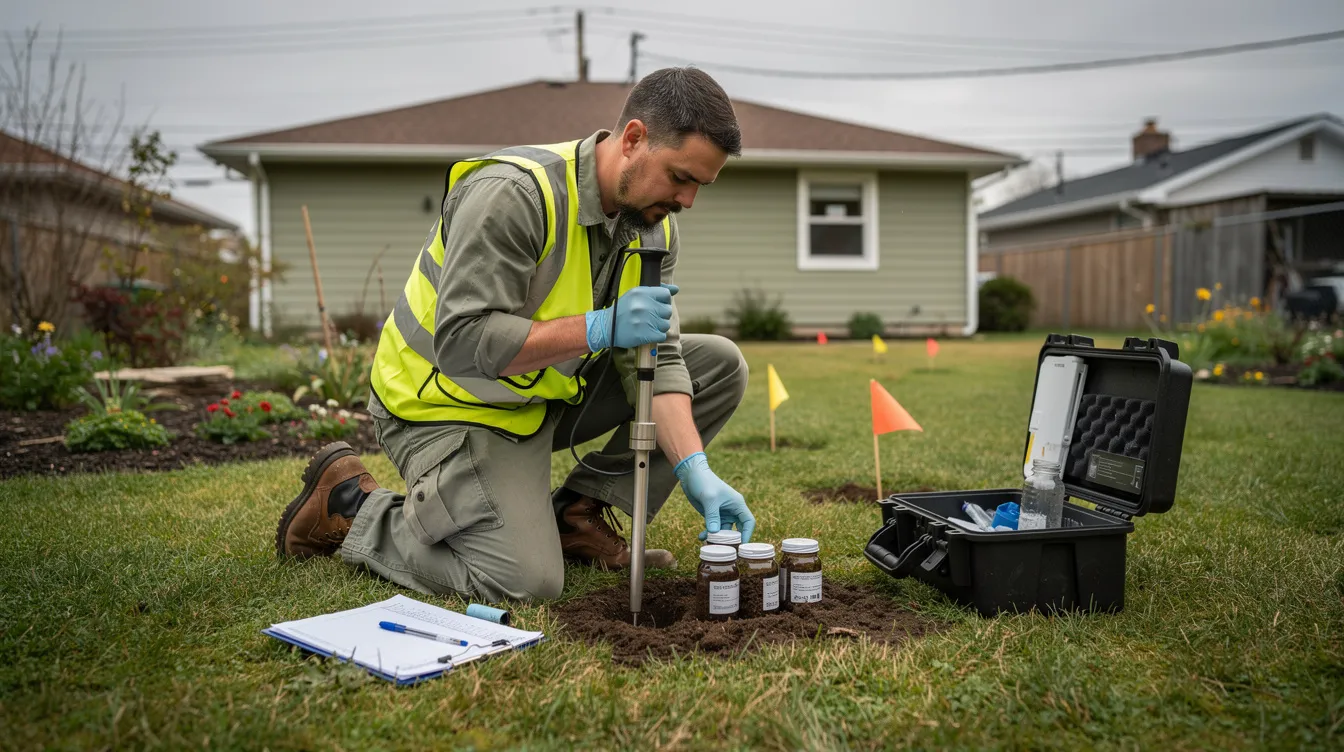
An environmental professional is kneeling in a residential yard, carefully collecting soil samples to assess for hazardous materials and potential environmental contamination. This process is essential for property owners to manage health risks associated with asbestos and other environmental hazards.

Unlike abatement, remediation is the broader process of cleaning up and restoring contaminated structures, soils, or groundwater to meet health-based and regulatory standards over a longer timeframe. The remediation process addresses root causes and verifies that cleanup meets target levels.

 Remediation usually incorporates abatement steps, but extends further by:

  • Investigating and addressing root causes such as leaks, poor grading, or historic spills
  • Involving soil excavation, in-situ treatment, or groundwater pumping
  • Including verification sampling to confirm successful cleanup

Common remediation scenarios for Pompano Beach homeowners:

Scenario Typical Cause Remediation Approach
Petroleum contamination Old heating oil or fuel tank Soil excavation, groundwater treatment
Widespread mold Storm flooding affecting multiple rooms Full demolition, structural drying, restoration
Contaminated soil Former automotive shop converted to townhomes In-situ treatment, regulatory closure

Soil and groundwater remediation in Florida falls under Florida Department of Environmental Protection (FDEP) rules, with specific cleanup target levels and reporting requirements that environmental consultants must manage. Remediation projects have longer timelines and more documentation than straight abatement jobs, which matters significantly for real estate transactions and insurance claims.

👉Also Read: Asbestos Remediation Waste Disposal in Florida: How to Properly Dispose of ACM

Abatement vs. Remediation: Key Differences Homeowners Should Know

Many Pompano Beach homeowners hear both terms from adjusters, contractors, and inspectors without understanding the distinction. Here’s a direct comparison:

Category Abatement Remediation
Purpose Immediate risk reduction for safe occupancy Long-term environmental restoration and regulatory closure
Scope Specific building materials (asbestos tiles, moldy drywall) Wider impacts, such as contaminated soil plumes or chronic moisture
Timeline Days to a few weeks Months, including monitoring and follow-up testing
Regulatory Involvement OSHA and EPA rules on a project basis Coordination with FDEP and Broward County under strict regulations

Why Classification Matters

  • Mislabeling a remediation project as “simple abatement” leads to cheap, ineffective work that fails inspections
  • Treating minor abatement as full remediation results in unnecessary disruption and inflated costs, often 2-3x overruns
  • Lenders and buyers commonly request documentation showing work was completed under recognized standards

Why Proper Environmental Assessment Comes First

In Pompano Beach’s regulatory climate, consultants should never recommend abatement or remediation based on a quick visual inspection alone. Credible decisions follow a structured environmental site assessment.

Typical environmental assessment steps include:

  • Initial site visit: Visual inspection of attic, crawlspaces, wall cavities, and exterior for intrusion points
  • Sample collection: Bulk building material samples for asbestos, paint chips for lead, air and surface samples for mold spores, and soil samples for suspected spills
  • Laboratory analysis: Using accredited Florida labs with 24-72 hour turnaround for rush panels

Consultants interpret results against federal standards (EPA, HUD for lead, OSHA), Florida and Broward County guidelines, and health-based benchmarks for vulnerable residents.

A written survey is often required by building officials or lenders before issuing permits. Professional assessment prevents unnecessary full removal when only specific components are contaminated, and avoids cosmetic fixes that leave deeper contamination creating future liability.

👉Also Read: Why Environmental Consulting Companies in Fort Lauderdale Are Essential for Property Development

What Questions Should Pompano Beach Homeowners Ask Their Environmental Consultant?

Treat your consultant as a guide for managing environmental hazards. Ask detailed questions before signing any work authorization or allowing demolition to begin.

Essential Questions

Question Why It Matters
“Is this primarily abatement or remediation — and what does that mean for my home?” Clarifies scope, timeline, and cost expectations
“What testing confirms the contamination type and extent?” Request lab reports and sample location maps
“Which Florida and Broward County regulations apply to this project?” Ensures compliance with health and safety rules
“What are the short-term and long-term health hazards if we delay?” Clarifies temporary relocation needs
“How will this affect resale or refinancing?” Determines documentation requirements for transactions

What Additional Critical Questions Should You Ask Your Environmental Consultant?

  • What permits, notifications, or written plans will you handle? (asbestos notifications, demolition permits, FDEP reporting)
  • What realistic timeline should I expect from assessment to final clearance?
  • How will we verify cleanup success? (post-abatement testing, clearance documentation)
  • Who performs on-site work — your team or subcontractors — and what Florida licenses do they hold?

These questions help homeowners make informed decisions rather than accepting verbal assurances about conditions being safe.

What Are the Key Regulatory and Compliance Requirements for Environmental Work in Florida?

Florida and Broward County have detailed environmental and building rules that influence both abatement and remediation services. Understanding these helps property owners avoid serious health problems from improper handling and legal exposure.

Key Regulatory Elements

Asbestos: FDEP enforces federal NESHAP rules. Renovation or demolition typically requires an asbestos survey and written notification 10 working days before disturbing asbestos-containing materials.

Lead: EPA Renovation, Repair, and Painting (RRP) requirements apply to pre-1978 housing, requiring certified firms and lead-safe work practices.

Mold: While Florida does not regulate mold levels the way it does asbestos, mold assessors and remediation specialists must be licensed under Florida Statute 468.

Soil and Groundwater: FDEP oversees the cleanup of petroleum and hazardous substances through formal programs. Some contamination must be reported when discovered during construction or property transactions.

Properly documented work — reports, lab data, and clearance letters — protects homeowners from future liability with tenants, buyers, or neighbors. Non-compliant work or failure to notify authorities can result in fines under state rules, with federal NESHAP civil penalties potentially exceeding $70,000 per day per violation, as well as project delays or required rework.

How Environmental Consultants Support Homeowners Throughout the Process

Environmental consultants serve as central coordinators connecting testing, planning, contractors, and regulatory requirements into a single roadmap.

Assessment Phase

  • Initial consultation to understand homeowner concerns and property history
  • Designing investigation plans with appropriate sampling strategies
  • Interpreting results and recommending abatement, remediation, or both

Project Management

  • Preparing written scopes of work and competitive bid packages
  • Coordinating with licensed Florida mold remediation firms, asbestos abatement professionals, and environmental cleanup contractors
  • Interfacing with building officials and FDEP on permit and notification requirements

Closeout

  • Conducting site visits to verify that contractors follow required safety practices
  • Arranging clearance testing and interpreting results
  • Providing final reports and documentation for insurers, buyers, or lenders

What Are the Most Common Mistakes Homeowners Make When Addressing Contamination?

In the rush to keep projects moving or closings on track, homeowners often make avoidable errors:

  • Assuming all contamination requires full containment or removal, when a controlled enclosure or targeted work may be safer and more cost-effective
  • Hiring general contractors for mold or asbestos removal without involving licensed abatement professionals leading to cross-contamination or regulatory violations
  • Skipping testing to save money and proceeding with demolition, only to discover asbestos or lead paint requiring expensive rework
  • Delaying action until a buyer’s inspection flags issues, jeopardizing closings, and reducing negotiating power
  • Accepting verbal assurances without written lab results or formal clearance letters
  • Failing to maintain records — reports, permits, and results — that future buyers and insurers will request

Engage an environmental consultant early and request step-by-step written plans so decisions happen proactively rather than reactively.

When to Call an Environmental Consultant in Pompano Beach, Florida

Many homeowners wait until crisis — a failed inspection, loan denial, or long-term exposure concern — before calling a consultant. Earlier involvement typically reduces disruption and total cost.

Warning Signs Requiring Immediate Attention

  • Persistent musty odors or visible mold patches larger than a dinner plate
  • Discovery of 9″x9″ vinyl floor tiles, popcorn ceilings, or pipe insulation in pre-1980 homes, especially before renovation
  • Fuel odors in soil, stained concrete near vehicle parking, or evidence of former fuel tanks

Situations Where Early Consultation Saves Money

  • Before listing older properties for sale
  • After flood events or plumbing failures soaking materials for 48 or more hours
  • When neighbors or an HOA raise concerns about odors or contamination in an affected area

Choose consultants with Florida-specific experience and current licenses who can provide recent Broward County project examples.

👉Also Read: How Long Does It Take to Remove a Popcorn Ceiling with Asbestos in Pompano Beach

Ready to Protect Your Home? Talk to EPAC Environmental Services, Inc. Today.

You’ve read the questions. You know the difference between abatement and remediation. Now the most important step is making sure the right team is in your corner before the problem gets worse — or before a buyer’s inspector finds it first.

EPAC Environmental Services, Inc. is a Florida-licensed environmental consulting firm serving Pompano Beach and Broward County homeowners with the full range of services covered in this guide — from initial assessments and laboratory sampling to regulatory coordination with FDEP and final clearance documentation.

Whether you’ve discovered a musty smell after last season’s storms, you’re preparing to renovate a pre-1980 home near Federal Highway, or you need a clean environmental record before listing your property, EPAC brings the local expertise, licensed professionals, and documented processes that lenders, buyers, and insurers require.

Here’s what working with EPAC Environmental Services, Inc. looks like:

  • A straight answer on whether your situation calls for abatement, remediation, or both — before any work begins
  • Written assessment reports backed by accredited Florida laboratory results
  • Full management of FDEP notifications, Broward County permits, and contractor coordination
  • Clearance documentation that holds up at closing, with your insurer, and for future buyers

Don’t wait for a failed inspection or a denied loan to take action. Pompano Beach’s coastal humidity, aging housing stock, and active storm season mean that small contamination issues rarely stay small. The homeowners who fare best are the ones who called early.

Contact EPAC Environmental Services, Inc at (954) 974-7055 or schedule your consultation today and get a clear, written assessment of what your property needs — and what it doesn’t.

Frequently Asked Questions

How much does environmental abatement or remediation typically cost for a Pompano Beach home?

Costs vary significantly by issue and scope. Small, localized mold abatement — one bathroom or closet — often runs in the low thousands of dollars. Asbestos abatement for a popcorn ceiling or pipe insulation in a single residential area typically costs several thousand dollars, depending on size and access.

Soil or groundwater remediation from fuel spills can range from several thousand to tens of thousands of dollars based on depth, extent, and the level of regulatory oversight required. Always request written, line-item estimates that separately identify assessment, abatement, and remediation costs. Be cautious of unusually low bids that skip testing or documentation.

Can I stay in my home during abatement or remediation work?

It depends on the contamination type and extent. For small, well-contained mold or asbestos work with proper full containment and negative pressure, consultants sometimes allow occupants to remain in unaffected areas of the home. For large-scale projects involving widespread contamination or significant demolition, temporary relocation is recommended — especially for families with children, elderly residents, or medically vulnerable members.

Ask your consultant for a written safety plan describing off-limits areas, dust management procedures, and whether short-term housing should be arranged. Your consultant should also outline emergency procedures and how containment will be maintained during Florida’s afternoon storm season.

 Will my homeowner’s insurance cover abatement or remediation costs?

Coverage is highly policy-specific. Sudden and accidental events, such as a burst pipe causing mold, may be partially covered, while long-term maintenance issues generally are not. Asbestos and lead abatement are frequently excluded unless tied to an insured event.

Review your policy carefully for mold, pollution, and hazardous material clauses. Ask your consultant to provide detailed reports that insurers can evaluate. Contact your insurance agent before starting major work to understand documentation and pre-authorization requirements.

How long will it take to receive final clearance after cleanup?

Timelines depend on project complexity. Simple mold abatement affecting drywall and insulation can often be assessed, cleaned, and cleared within days to a couple of weeks, including lab turnaround. Asbestos abatement tied to renovation may require one to three weeks, accounting for permits and the required 10-day NESHAP notification period.

Soil or groundwater remediation may require multiple sampling events over several months before regulators confirm that cleanup goals have been met. Ask consultants upfront for realistic schedules that include lab turnaround times and any waiting periods imposed by FDEP or Broward County.

What documentation should I keep after abatement or remediation is finished?

Keep these documents safely stored: initial assessment and survey reports with sampling locations and lab results; written work plans describing activities performed; permits, notifications, and regulatory correspondence; final clearance reports with laboratory confirmation; and warranty information from contractors.

This documentation expedites future sales, refinancing, or insurance claims and demonstrates that work was handled professionally and in compliance with applicable codes. Many buyers and lenders specifically request evidence that materials such as asbestos fibers were properly assessed and addressed before any construction or demolition work proceeded.

is it possible to sell a contaminated property in pompano beach fl

Is It Possible to Sell a Contaminated Property in Pompano Beach FL?

Pompano Beach has a long history of fuel stations, marine facilities, and coastal development. That history leaves a real estate legacy: soil and groundwater contamination from petroleum and solvents is common throughout the area, and older structures frequently pose asbestos and mold risks.

If you own one of these properties, the short answer is yes, you can sell it. But how you handle disclosure, documentation, and environmental liability will determine whether that sale closes smoothly or falls apart in due diligence.

This guide explains what Florida law requires, what buyers and lenders expect, and the practical steps Pompano Beach property owners should take before listing.

EPAC Environmental Services, Inc. helps property owners identify and document potential environmental risks before a property is listed. With over 38 years of experience in South Florida, we provide Phase I and Phase II Environmental Site Assessments, asbestos and mold evaluations, and fuel tank compliance services that support real estate transactions and lender requirements.

Before you list, contact EPAC Environmental Services, Inc. to understand your environmental position and avoid delays during sale negotiations. Call (954) 974-7055 or submit the contact form to get started.

👉Also Read: Asbestos Remediation Waste Disposal in Florida: How to Properly Dispose of ACM

What Makes a Property “Contaminated”?

A contaminated property is one where soil, groundwater, building materials, or indoor air contain hazardous substances above Florida’s regulatory cleanup thresholds.

In Pompano Beach, the most common sources include:

  • Former or active gas stations and marinas with underground or aboveground storage tanks
  • Auto repair shops that used solvents, degreasers, and oils
  • Dry cleaners and light industrial facilities using chlorinated solvents
  • Older buildings containing asbestos materials or lead-based paint
  • Coastal structures with moisture intrusion and mold growth

Broward County and the Florida Department of Environmental Protection (FDEP) both maintain publicly accessible contaminated site inventories. Buyers, lenders, and their attorneys can and do check these databases before closing. Concealment is not a viable strategy.

What Florida Law Requires When Selling

Florida real estate law places the burden of disclosure squarely on the seller.

Disclosure obligations:

  • Sellers must disclose all known material defects, including environmental contamination, to prospective buyers
  • Written disclosure is strongly recommended — Florida does not mandate a specific disclosure form by statute, so documenting your disclosures in writing provides critical legal protection against future disputes
  • Florida law also requires a statutory radon disclosure statement in all real estate contracts, separate from general environmental hazard disclosures
  • Commercial transactions typically include environmental representations and warranties in the purchase agreement

Liability exposure: Florida’s environmental statutes can assign cleanup and investigation liability to current property owners regardless of who originally caused the contamination. This is one of the most important legal realities for any seller to understand — ownership itself can create responsibility.

Certain types of contamination may qualify for state-funded cleanup assistance through FDEP’s Petroleum Restoration Program, but eligibility must be confirmed through a formal review process.

Penalties for non-disclosure:

  • Civil lawsuits for fraud or misrepresentation
  • FDEP enforcement actions and fines
  • Substantially higher legal and remediation costs when issues surface after closing

A professional environmental assessment creates the documentation trail that demonstrates good faith, satisfies due diligence, and protects you if questions arise post-sale.

👉Also Read: Should You Get a Phase I ESA on Residential Property in Pompano Beach, Florida, or Is It Just for Commercial?

What Do Phase I and Phase II Environmental Site Assessments Involve and When Are They Required?

Most institutional buyers, lenders, and sophisticated investors will require an Environmental Site Assessment (ESA) before closing. Understanding what each phase involves helps you prepare.

Phase I ESA

A Phase I is a research and inspection-driven review — no soil or water sampling is involved. The consultant examines historical records, regulatory databases, and aerial photographs, conducts a site visit, and performs interviews.

  • Conducted to ASTM E1527-21 standards, the current EPA-required standard under CERCLA’s All Appropriate Inquiries (AAI) rule
  • Typical cost in Florida: $2,500–$6,000+, depending on property size, complexity, and regulatory history
  • Identifies Recognized Environmental Conditions (RECs) that may warrant further investigation
  • Recommended for all commercial properties, former service stations, and any site with suspected past chemical use
  • Turnaround: typically 2–3 weeks for standard sites; 4–6 weeks for sites with complex regulatory histories, where older records may need to be retrieved from state archives

A critical but often overlooked benefit: a Phase I ESA completed in accordance with ASTM E1527-21 qualifies buyers for the innocent landowner defense and bona fide prospective purchaser protections under federal CERCLA law. This is a primary reason institutional buyers and lenders require one, not just paperwork compliance.

A clean Phase I broadens your buyer pool, supports stronger pricing, and satisfies most lender requirements.

Phase II ESA

When a Phase I identifies RECs, Phase II involves physical sampling of soil, groundwater, soil vapor, or building materials to determine whether contamination is present and at what levels.

  • Costs typically range from $15,000–$100,000+, depending on site complexity and number of sampling locations
  • Common applications include testing around former tank locations, sampling indoor air in buildings near dry cleaners, or assessing groundwater beneath industrial sites
  • Results allow buyers to quantify risk rather than walk away from the deal entirely

Starting the assessment process before listing — rather than waiting for a buyer to request it — gives you control over timeline, narrative, and negotiating position.

What Are Your Options as a Seller When Dealing With Contaminated Property?

There is no single right approach. The best path depends on contamination severity, your timeline, and the buyer market you are targeting.

Sell As-Is

Many real estate investors actively seek contaminated properties, provided the risks are clearly documented, and the price reflects them. Supplying existing environmental reports and regulatory correspondence upfront accelerates their due diligence and reduces the chance of last-minute renegotiation.

Remediate Before Listing

Completing cleanup to the point of receiving a Florida DEP Site Rehabilitation Completion Order (SRCO) — or a No Further Action (NFA) determination for qualifying sites — removes the contamination discount from your price, expands financing options for buyers, and typically shortens time to close. This approach makes the most sense when contamination is moderate, cleanup costs are defined, and the market value uplift justifies the investment.

Negotiate a Shared or Deferred Remediation Structure

Sellers and buyers can split remediation costs, apply closing credits, establish escrow arrangements tied to cleanup milestones, or transfer DEP-approved cleanup obligations to the buyer at closing. These structures are common in commercial transactions and allow deals to close without full remediation being completed first.

How Do Phase I ESA, Phase II ESA, and Remediation Expenses Affect Overall Property Value?

Contamination affects not just whether a property sells, but what it sells for and on what terms.

Cost Category Typical Range
Phase I ESA $2,500–$6,000+
Phase II ESA $15,000–$100,000+
Underground Storage Tank (UST) Removal & Site Cleanup $100,000–$500,000
Mold Remediation $10,000–$50,000+

Properties listed on public contaminated-site databases can carry a market stigma even after cleanup is complete. In Pompano Beach specifically, former service station sites along major commercial corridors frequently require fuel tank removal and soil remediation, while waterfront and coastal properties often face significant mold response costs due to humidity and flood exposure.

Understanding your actual cost exposure before listing is essential. It determines whether remediating first makes financial sense, what discount to apply for an as-is sale, and how to structure negotiations when a buyer raises environmental concerns.

How Do You Define a Listing Strategy With Environmental Remediation Costs in Mind?

1. Commission an environmental assessment early

Don’t wait for a buyer’s inspector to surface problems. Engage an environmental consultant to review site history, conduct relevant inspections, and determine whether Phase II sampling is warranted. For older buildings, include asbestos, lead paint, and mold evaluations.

2. Organize your documentation

Compile all existing environmental reports, regulator correspondence, tank permits, and cleanup records into a single, organized disclosure package. A well-prepared disclosure package signals professionalism and reduces buyer anxiety.

3. Define your strategy with your consultant

Before setting a price or accepting an offer, get a realistic estimate of remediation costs and timelines. Compare the net proceeds from a clean sale against an as-is discount. This analysis should drive your listing strategy — not the other way around.

4. Work with agents who know environmental transactions

Not all real estate professionals have experience with contaminated properties. In South Florida’s commercial market, this matters. Choose a representation that understands how environmental conditions affect deal structure, financing, and closing timelines.

5. Prepare for buyer due diligence

Anticipate detailed questions about contamination extent, regulatory status, and cleanup options. Having clear, current documentation from a qualified environmental consultant — and making that consultant available for technical questions — keeps deals moving.

What Does Working with an Environmental Consultant in Pompano Beach Involve?

An experienced local environmental consultant does more than run tests. They evaluate historical and current site conditions, oversee sampling and remediation, interface directly with Broward County and FDEP, and produce reports that are formatted for transaction use — meaning lenders and attorneys can actually work with them.

For Pompano Beach properties specifically, local expertise matters. Coastal humidity, floodplain designations, and Broward County’s regulatory environment create conditions that differ meaningfully from inland Florida markets.

EPAC Environmental Services, Inc. is a South Florida–based firm with direct experience in Pompano Beach and greater Broward County. Our services include:

  • Phase I and Phase II ESAs on transaction timelines
  • Asbestos inspections for commercial and multifamily buildings
  • Mold and indoor air quality assessments
  • Soil and groundwater testing for petroleum, solvents, and metals
  • Underground storage tank compliance, removal, and closure services

👉Also Read: Why Environmental Consulting Companies in Fort Lauderdale Are Essential for Property Development

Contact EPAC Environmental Services, Inc. Before Listing Your Property

Contamination does not make a Pompano Beach property unsellable. It does make the process more complex — and the difference between a deal that closes and one that collapses often comes down to preparation, documentation, and the quality of your environmental consultant.

Florida law requires transparency. Buyers and lenders require documentation. Getting ahead of both — with accurate assessments, honest disclosure, and a clear remediation or pricing strategy — is how contaminated property sales get done.

Contact EPAC Environmental Services, Inc. to discuss your property before you list. Whether you’re dealing with a former service station, an older commercial building, or a waterfront property with moisture issues, early consultation puts you in a significantly stronger position.

Frequently Asked Questions

How to find out if property is contaminated

The only dependable way to determine if a property is contaminated is through a professional environmental assessment. Start by reviewing past land use, especially if the site was previously a fuel station, industrial facility, or older commercial building. Next, a Phase I Environmental Site Assessment is conducted to identify potential risks using records, inspections, and regulatory data. If concerns are found, a Phase II assessment involves soil, groundwater, or vapor testing to confirm contamination. EPAC Environmental Services, Inc. provides these services in Pompano Beach and helps property owners understand environmental conditions before buying, selling, or redeveloping a site.

Does my property need to be fully remediated before I can list it?

No. Florida law requires disclosure of known contamination, not completion of cleanup before listing. Some buyers or lenders may require specific actions — such as stopping an active fuel release — as a condition of closing. An environmental consultant can help you distinguish between what is legally required and what is negotiable.

Will buyers see my property on a contaminated-site map?

It depends on your property’s current regulatory status. FDEP’s Contamination Locator Map (CLM) shows sites that are actively under DEP cleanup oversight — sites that have already received a Site Rehabilitation Completion Order (SRCO) or No Further Action (NFA) determination are removed from the CLM. However, buyers and their consultants also use other databases — including EPA records, historical EDR reports, and Broward County’s contaminated site inventory — that may capture historical contamination not reflected in the CLM. Use all available public information as the starting point for your own disclosure package, and do not assume that absence from one database eliminates buyer scrutiny.

Can a buyer get financing on a contaminated property?

Many lenders will finance contaminated property transactions, but most require at a minimum a Phase I ESA. Properties with significant unresolved contamination are more likely to attract cash buyers. If conventional financing is important to your sale, completing or advancing cleanup is worth evaluating.

How long do Phase I and Phase II environmental site assessments take?

A Phase I ESA typically takes 2–3 weeks from engagement for standard sites. Sites with complex regulatory histories — particularly those with prior environmental work on file — may require 4–6 weeks, as older state agency records may not be available electronically. Phase II sampling adds additional time depending on the number of sample locations and laboratory turnaround, which can range from a few weeks to several months on complex sites. Beginning the process before listing avoids delays at the offer stage.

I discovered contamination during renovation. What should I do?

Stop work immediately in the affected area. Contact an environmental professional before resuming any activity that could spread contamination. Depending on the substance involved — particularly petroleum products — prompt notification to FDEP may be legally required. Early, documented response protects you both regulatorily and in any future sale.

10 Questions to Ask Environmental Consulting Companies in Fort Lauderdale Before You Hire

10 Questions to Ask Environmental Consulting Companies in Fort Lauderdale Before You Hire

Environmental consulting is not optional for property owners, developers, banks, and businesses operating in Fort Lauderdale and greater Broward County. The region’s distinctive environmental conditions—shallow water tables often just 3–6 feet below surface, coastal flooding exposure, and decades of industrial and commercial activity- create contamination risks that affect transactions, financing, and long-term property value.

South Florida’s dense redevelopment of properties built between the 1950s and 1980s frequently uncovers legacy issues: leaking underground storage tanks from former service stations, chlorinated solvents from dry cleaning operations, and asbestos-containing materials in older structures. Hiring the wrong environmental consultant can mean failed closings, FDEP enforcement actions, and remediation delays that derail projects in 2026’s active real estate market.

This article gives you 10 concrete environmental consultant interview questions to ask any firm before you hire.

EPAC Environmental Services, Inc. provides practical, reliable environmental consulting support across South Florida, helping clients make informed decisions and move projects forward with clarity. Speak with our team today at (954) 974-7055 to evaluate your site and take the next step with confidence.

👉Also Read: Is Your Fuel Tank Leaking? How Early Detection Systems Prevent Environmental Contamination & Costly Fuel Tank Repairs in Florida

Why Asking the Right Questions Matters

Florida and federal regulations span tens of thousands of pages. Fort Lauderdale projects regularly intersect with the Florida Department of Environmental Protection (FDEP), Broward County Environmental Planning Division, and local building departments. Generic questions produce generic answers that won’t reveal whether a firm truly understands your property’s risks.

Targeted interview questions help you verify a firm’s licenses, certifications, local project experience, and familiarity with standards like ASTM E1527-21 and FDEP risk-based cleanup criteria. Asking the right questions up front avoids change orders, schedule overruns that jeopardize closings, and compliance failures that lead to Notices of Violation and fines. Use the following 10 questions as a checklist when interviewing any environmental consultancy in Fort Lauderdale.

10 Key Questions to Ask Environmental Consulting Companies in Fort Lauderdale

Each question below includes what to listen for and how EPAC Environmental Services Inc. typically addresses the issue. These questions are tailored to South Florida conditions, including coastal groundwater, legacy contamination, and strict lender requirements for commercial property transactions. Collect specific project examples and written deliverables—not just yes/no answers.

1. What types of environmental assessments do you provide?

A Phase I Environmental Site Assessment identifies potential environmental risks through records review, site reconnaissance, and interviews. The goal is to flag Recognized Environmental Conditions (RECs) conditions suggesting possible contamination that warrant further investigation. Phase I ESAs don’t involve sampling; they rely on analysis of historical records, regulatory databases, and visual inspection.

When a Phase I identifies concerns, such as a former gas station or dry cleaner on or near the property, a Phase II Environmental Site Assessment follows. Phase II ESAs are intrusive investigations involving soil, groundwater, and sometimes soil gas sampling to confirm whether contamination exists and determine its extent. In Fort Lauderdale, FL, additional services like limited Phase II screening programs and pre-acquisition desktop reviews provide flexibility based on property history and lender requirements.

EPAC Environmental Services Inc. completes Phase I ESAs in accordance with ASTM E1527-21 and aligns Phase II scopes with FDEP risk-based corrective action guidance.

2. What licenses and certifications does your team hold?

Florida-specific licensure is critical for regulatory acceptance and lender confidence. Reports from unlicensed consultants may be rejected by FDEP and local building departments, creating costly delays. Look for Professional Geologist (PG) licensure, a General Contractor license, and a Pollutant Storage System Contractor license as key indicators of a qualified firm.

Relevant credentials include a Geology Business license confirming the firm meets Florida’s standards for professional geological practice, a Water Well Contractor license for drilling operations, and a Stormwater Management Inspector certification for erosion and sediment control work. Proper licensure allows environmental professionals to sign and seal reports and design remediation systems acceptable to regulators.

EPAC Environmental Services, Inc. holds Florida PG and Geology Business licenses, a Pollutant Storage System Contractor license, a General Contractor license, a Water Well Contractor license, and a Stormwater Management Inspector certification. Ask any firm for sample resumes of key project staff who will actually conduct the work, not just the company name on a proposal.

3. How much experience do you have in Fort Lauderdale and South Florida?

An environmental consultant is seen outdoors in Florida, carefully examining soil samples as part of an environmental site assessment. The image highlights the consultant's technical expertise in assessing environmental risks and ensuring compliance with relevant regulations for a challenging environmental project.

Local experience directly translates to more accurate assessments. An experienced Fort Lauderdale team understands limestone geology, high groundwater levels, saltwater intrusion patterns, and historic land uses across Broward County, Miami-Dade, and Palm Beach counties. This technical expertise is not transferable from other regions.

A consultant with regional depth recognizes common corridor issues along I-95, US-1, and older industrial zones west of downtown. They anticipate recurring contamination sources and design sampling programs that account for South Florida’s distinctive hydrogeology.

EPAC Environmental Services, Inc. has operated in Florida since the late 1980s, completing hundreds of environmental site assessments across coastal communities. Our project history includes marina redevelopment near the New River, warehouse-to-multifamily conversions, and fuel station portfolio reviews. Ask prospective consultants for the number of projects completed in Fort Lauderdale within the past 3–5 years—not just nationwide totals.

👉Also Read: Asbestos Remediation Waste Disposal in Florida: How to Properly Dispose of ACM

4. Can you provide references or past project examples?

Any established environmental consulting firm should willingly share references from banks, investors, attorneys, and property owners. A strong reference involves a similar property type, a similar risk level, and a recent completion date, for example, a 2024 mixed-use redevelopment case in Broward County.

EPAC Environmental Services, Inc. regularly provides contactable references from lenders, municipalities, and private clients for Phase I and Phase II ESAs, asbestos and mold surveys, and remediation design projects. Ask for anonymized sample reports with confidential client details removed to evaluate report clarity and depth before you commit.

Strong references demonstrate successful regulatory closure, on-time closings, and cost-effective mitigation measures, not just technical completeness.

5. What is your approach to hazardous material inspections?

Fort Lauderdale properties commonly encounter multiple hazardous material categories: asbestos in pre-1989 construction, lead-based paint in older housing, mold due to humidity and hurricane exposure, and underground storage tanks at former service stations. Each category requires distinct expertise and compliance frameworks.

A qualified consultant performs asbestos surveys following AHERA protocols, mold assessments consistent with Florida licensing rules, and fuel tank inspections aligned with FDEP storage tank regulations. Ask about laboratory accreditations, sampling methods, chain-of-custody procedures, and how results are summarized for a non-technical audience.

EPAC Environmental Services, Inc. delivers asbestos, lead, and mold surveys that integrate with planned renovations or demolitions and support permit applications with the Florida Department of Business and Professional Regulation.

6. How do you handle reporting and regulatory compliance?

High-quality environmental reports need to be defensible to regulators, lenders, and courts, not just check-the-box documents. A good firm documents methodology transparently, provides clear figures and tables, and ties findings directly to FDEP rules, Broward County codes, and relevant regulations like CERCLA, RCRA, and the Clean Water Act.

EPAC Environmental Services, Inc. prepares reports with explicit regulatory citations and action items so clients understand exactly what steps are needed for environmental protection and compliance. Our reports support “innocent landowner” and “bona fide prospective purchaser” defenses where applicable.

Ask how the firm manages communication with agencies: Do they respond to FDEP comments? Attend regulatory meetings? Update reports when regulations change? This ongoing engagement indicates true client advocacy.

7. What are your procedures if contamination is discovered and remediation is needed?

When a Phase II ESA confirms contamination, the typical sequence involves further delineation, risk assessment, remedial alternatives analysis, and regulatory coordination. Common Fort Lauderdale contaminants include petroleum from underground storage tanks, chlorinated solvents from dry cleaners, and impacts to shallow groundwater and surface water.

EPAC Environmental Services, Inc. develops remedial investigation work plans, engineering designs for systems like soil vapor extraction or pump-and-treat, and risk-based closure strategies aligned with FDEP’s framework. We understand that site remediation planning must account for construction schedules and loan requirements—not just technical concerns.

Ask about timelines, budget ranges, and communication protocols. Understand whether the firm supports monitored natural attenuation approaches or natural attenuation monitoring, where appropriate for your project.

8. How quickly can your team complete assessments and projects?

Speed matters in Fort Lauderdale’s 2026 property market, where purchase agreements often hinge on 10–30 day due diligence windows. Missing deadlines creates cascading consequences for stakeholders and clients.

Realistic timelines: Phase I ESAs typically complete within 10–15 business days. Phase II fieldwork and laboratory analysis may require several weeks, depending on property access and sampling scope. Remediation design timelines vary based on contamination complexity.

EPAC Environmental Services, Inc. meets tight closing dates by prioritizing critical path tasks, pre-scheduling fieldwork, and using local laboratories. Ask about rush service options and weekend site access. However, demonstrate problem-solving abilities by recognizing that cutting corners on research or sampling creates far greater costs later.

9. Do you offer ongoing maintenance or monitoring services?

Long-term monitoring may be required for active gas stations, industrial facilities, and sites with risk-based closures requiring periodic groundwater sampling. Typical ongoing services include groundwater and soil gas monitoring, storage tank compliance checks, stormwater inspections, and annual environmental compliance audits.

EPAC Environmental Services, Inc. provides long-term monitoring and operations support, helping clients maintain compliance with FDEP permit conditions and local ordinances. Our continuous learning approach means we stay current with regulatory knowledge and track changes in federal regulations and state guidance.

Ask whether monitoring data will be stored, trended, and reported in a way that’s easy to present to regulators, investors, or corporate leadership. Multi-year relationships with a single consultant who knows your site’s history provide significant value.

10. How are your fees structured, and what’s included in your proposal?

Transparent pricing is essential, especially on challenging environmental project sites where the scope can change quickly. Common fee structures include lump-sum pricing for Phase I ESAs, time-and-materials for Phase II and remediation, and separate budgets for laboratory analysis and subcontractors.

EPAC Environmental Services, Inc. provides detailed written scopes listing what’s included: site visits, database searches, the number of samples budgeted, and meeting attendance. We clearly identify what could trigger a change order.

Compare proposals on level of effort, staff qualifications, and completeness of deliverables—not just cost. Ask about potential additional costs specific to Fort Lauderdale, such as access agreements for neighboring properties or dewatering permits if excavation intersects shallow groundwater.

👉Also Read: Soil Contamination Testing: Why Florida Developers Need Phase II Assessments Before Construction

What Are the Common Pitfalls When Choosing an Environmental Consultant?

Many problems stem from choosing solely on price or using firms without deep Florida experience. Typical pitfalls include:

  • Hiring consultants without Florida PE or PG licenses, producing reports regulators reject

  • Accepting generic national templates that ignore local hydrogeology and environmental conditions

  • Assuming a minimal Phase I is sufficient for high-risk properties like former service stations

  • Using companies unfamiliar with current ASTM E1527-21 requirements or recent FDEP guidance changes

  • Skipping references or neglecting to ask about remediation capabilities

Use the 10 questions above as a practical tool to identify these issues before they derail your Fort Lauderdale project.

How EPAC Environmental Services, Inc. Can Help

A professional environmental team is conducting field sampling with specialized equipment in a natural setting, showcasing their expertise in environmental science and risk assessment. This image highlights the importance of environmental protection and compliance with relevant regulations in challenging environmental projects.

EPAC Environmental Services, Inc. is a Florida-focused environmental consultancy with more than 38 years of experience, headquartered in South Florida and deeply familiar with Fort Lauderdale’s development patterns and regulatory environment.

Our core services include Phase I and Phase II Environmental Site Assessments, asbestos and mold inspections, fuel tank and industrial compliance, and remedial engineering design tailored to Florida’s geology. We conduct environmental impact assessments and support brownfield redevelopment projects requiring complex information synthesis and regulatory closure.

EPAC Environmental Services, Inc. serves a broad client base: community banks, national lenders, municipalities, industrial operators, and residential and commercial developers throughout Broward County and neighboring areas. Our project management skills, problem-solving approach, and commitment to ASTM E1527-21 compliance produce reports that withstand scrutiny from FDEP, lenders, and attorneys. We stay informed through industry conferences and maintain active member status in relevant professional organizations to address emerging concerns.

Ready to Hire the Right Environmental Consultant in Fort Lauderdale?

If you are preparing to buy, sell, or develop property in Fort Lauderdale or anywhere in Broward County, now is the time to ask the right questions and work with a team that has the answers. Call EPAC Environmental Services, Inc. at (954) 974-7055 or submit the contact form to request a proposal or consultation. Let us help you protect your investment, avoid costly surprises, and keep your project on track from day one.

Frequently Asked Questions

How early in a real estate transaction should I contact an environmental consultant?

Buyers, lenders, and attorneys in Fort Lauderdale typically engage an environmental consultant as soon as a purchase and sale agreement is signed to maximize the due diligence window. Contacting EPAC Environmental Services, Inc. even earlier during letter-of-intent negotiations helps set realistic timelines and contingencies in the contract. Waiting until the last week before closing often forces rushed work and increases the risk of surprises that threaten the deal.

Do I need a Phase I ESA for small properties like duplexes or small retail buildings?

While regulations don’t mandate Phase I ESAs for every transaction, most lenders in 2026 require them for commercial loans and many income-producing residential properties. Even smaller sites in Fort Lauderdale can have historic contamination from nearby dry cleaners, auto repair shops, or former fuel tanks. EPAC Environmental Services, Inc. can advise whether a full Phase I or a more limited screening is appropriate based on the property’s history and your lender’s requirements.

What happens if my Phase I ESA identifies a Recognized Environmental Condition (REC)?

Identification of a REC does not automatically kill a deal; it simply means there’s a reasonable suspicion of contamination or environmental risk requiring further evaluation. The typical next step is a targeted Phase II ESA to confirm whether contamination is present and determine its extent. EPAC Environmental Services, Inc. helps clients weigh options, negotiate with sellers, and plan for remediation or risk-based approaches if contamination is confirmed.

Can environmental issues affect my ability to get financing in Fort Lauderdale?

Banks and lenders often condition loans on satisfactory environmental due diligence, especially for properties with industrial or commercial histories. Unresolved contamination can lead to loan denials, stricter terms, or reserve requirements, particularly in Florida, where regulators closely track leaking underground storage tanks and groundwater impacts. Comprehensive, clearly written reports from EPAC Environmental Services, Inc. help lenders understand and manage risk, improving chances of loan approval.

How often do environmental regulations change, and how does that affect my project?

Both federal and Florida environmental regulations evolve regularly, with updates to ASTM standards, FDEP cleanup criteria, and local ordinances occurring every few years. Changes can affect cleanup target levels, reporting formats, and available risk-based options. Working with a firm like EPAC Environmental Services, Inc. that tracks 2024–2026 regulatory updates ensures your assessment methodology and remediation strategy remain current and defensible.

fuel tank repair, fuel tank repair near me

Is Your Fuel Tank Leaking? How Early Detection Systems Prevent Environmental Contamination & Costly Fuel Tank Repairs in Florida

Fuel storage tanks play a critical role in supporting commercial operations, construction sites, marinas, fleet facilities, and backup power systems throughout Florida. However, when a fuel tank begins to leak, even a small and unnoticed release can quickly develop into a serious environmental hazard and a costly financial liability. Diesel and petroleum products can migrate through soil, contaminate groundwater, and trigger regulatory violations that require extensive cleanup and reporting.

In areas such as Pompano Beach and across South Florida, fuel tank owners must comply with strict environmental regulations designed to protect sensitive ecosystems, drinking water sources, and nearby communities. State and local agencies closely monitor storage tank systems, meaning that delayed detection or improper handling of leaks can result in fines, operational downtime, and expensive remediation projects.

Many property owners are unaware that leaks often begin long before visible signs appear, making early detection systems essential for responsible tank management. This blog explores how modern leak detection technologies help identify problems before they escalate into environmental contamination or structural damage.

Don’t wait until a small issue with your gas tank or diesel fuel storage escalates into a major environmental and financial problem. At EPAC Environmental Services Inc., we provide comprehensive services for leaking tanks across Florida, including installation, maintenance, repairs, cleaning services and removal of both above-ground and underground systems.

Our licensed team ensures early leak detection, regulatory compliance, and safe handling, keeping your operations running smoothly while protecting the environment. Contact us today at (954) 974-7055 or submit the contact form to secure your fuel systems and prevent costly repairs.

👉Also Read: The Ultimate Checklist for Preparing Fuel Tanks for Hurricane in Florida: Top Steps for Safety and Readiness

Why a Suspected Fuel Tank Leak Needs Immediate Attention

A suspected fuel tank leak should never be ignored or delayed. Even minor releases of diesel or petroleum products can quickly escalate into significant environmental, financial, and regulatory problems. Because fuel systems are often installed underground or in low-visibility areas, leaks may remain undetected for long periods, allowing contamination to spread beyond the immediate site.

Environmental Risks Increase Rapidly

Fuel contains hydrocarbons and chemical additives that can penetrate soil and migrate toward groundwater. In Florida, where high water tables and porous soils are common, contamination can travel faster than many property owners expect. Once petroleum impacts groundwater or nearby stormwater systems, cleanup becomes far more complex and expensive.

Environmental contamination may lead to:

  • Soil and groundwater pollution
  • Damage to surrounding ecosystems and waterways
  • Vapor intrusion risks affecting nearby buildings
  • Long-term monitoring and remediation requirements

Early action helps contain contamination before it expands beyond the source area.

Regulatory Consequences and Compliance Obligations

Florida environmental regulations require property owners and operators to respond promptly when a release is suspected. Failure to investigate or report a leak can result in enforcement actions, penalties, or mandatory corrective measures imposed by regulatory agencies.

Immediate evaluation helps ensure:

  • Proper documentation and reporting procedures
  • Compliance with state and local environmental rules
  • Reduced risk of fines or project shutdowns
  • Faster approval for corrective actions when needed

Acting quickly demonstrates responsible management and can significantly limit regulatory exposure.

Financial Impact Grows Over Time

A small leak addressed early may only require targeted repairs and localized cleanup. However, delayed response often leads to extensive soil excavation, groundwater treatment, operational interruptions, and liability concerns during property transactions or refinancing.

Common cost escalations include:

  • Emergency remediation services
  • Property value reduction
  • Business downtime
  • Increased insurance complications
  • Environmental assessments required during sale or redevelopment

Preventative detection and prompt investigation are almost always less expensive than large-scale remediation.

Safety Concerns for People and Property

Beyond environmental damage, leaking fuel systems can create safety hazards. Petroleum vapors may accumulate in confined spaces, increasing risks of fire, explosion, or indoor air quality issues. Facilities with employees, tenants, or customers must address suspected leaks immediately to protect occupants and maintain safe operating conditions.

👉Also Read: Understanding What Is a Double-Walled Fuel Tank and Why It Matters

What Are the Most Common Causes of Fuel Tank Leaks?

Understanding the primary causes can help property owners take preventive measures and avoid costly repairs. Common causes include:

Aging Infrastructure and Corrosion

Over time, metal tanks naturally deteriorate due to corrosion, rust, or material fatigue. Both above-ground and underground tanks are susceptible, and without proper maintenance, small cracks can develop into significant leaks that compromise both the tank and the surrounding area.

Improper Installation or Maintenance

Tanks that are incorrectly installed or not regularly maintained are at higher risk for leaks. Improper sealing, inadequate supports, or poorly fitted piping can lead to structural stress points, increasing the likelihood of fuel escaping from the system.

Structural Damage from Natural Events

Florida is prone to hurricanes, flooding, and tropical storms. Tanks exposed to these natural events can experience physical damage, displacement, or deformation, resulting in leaks. Even minor shifts in the soil can impact underground storage tanks, creating stress fractures that allow fuel to seep into the ground.

Operational Errors and System Malfunctions

Human error, such as overfilling tanks, improper handling, or failure to follow routine operational procedures, can lead to leaks. Additionally, fuel piping systems, dispensers, and overfill prevention devices may fail or degrade over time, creating potential pathways for fuel loss.

👉Also Read: Why You Should Always Let Professionals Handle Your Fuel Tank Removal

Which Types of Fuel Tanks Are Most at Risk?

Fuel tanks come in several forms, and each type carries unique risks when it comes to leaks. Understanding these vulnerabilities is critical for preventing environmental contamination and costly repairs.

Above-Ground Tanks vs. Underground Tanks

Above-Ground Tanks (ASTs)

  • Pros: Easier to inspect visually, simpler to maintain, and typically less expensive to install.
  • Cons: More exposed to weather, temperature fluctuations, and physical damage from vehicles or machinery.
  • Leak Risk Factors: Corrosion of steel tanks, deterioration of protective coatings, and improper installation can lead to leaks.

Underground Tanks (USTs)

  • Pros: Hidden from view, saving surface space and reducing visual impact. Often better protected from physical damage.
  • Cons: More difficult to inspect and repair, and leaks may go unnoticed for long periods. Environmental contamination can be severe due to soil and groundwater exposure.
  • Leak Risk Factors: Corrosion, shifting soil, flooding, and improper backfilling increase the chance of leaks over time.

Temporary or Rental Tanks

Temporary or rental fuel tanks, commonly used on construction sites or for emergency fuel storage, are vulnerable due to frequent handling, transport, and installation variations. These tanks require careful monitoring, secure placement, and regular inspections to ensure integrity.

With over 38 years of experience in environmental consulting, EPAC Environmental Services, Inc. has installed, maintained, and inspected both above-ground and underground fuel tanks throughout Florida and New York. Our team ensures:

  • Proper coatings and corrosion protection for steel tanks.
  • Compliance with state regulations for storage, piping, and fuel dispensing systems.
  • Routine inspections and maintenance to prevent leaks and environmental damage.

EPAC’s professionals are well-versed in Florida’s unique soil and water conditions, which can exacerbate contamination risks. Our proactive approach to installation and monitoring ensures that clients avoid costly repairs and potential regulatory fines.

👉Also Read: When Is the Right Time to Decommission an Underground Fuel Tank?

How Can You Quickly Tell if Your Fuel Tank Is Leaking?

Fuel tank leaks rarely begin with dramatic warning signs. In many cases, the earliest indicators are subtle operational or environmental changes that are easy to overlook during day-to-day operations. Recognizing these early warning signals allows property owners and facility managers to act quickly before contamination spreads or repair costs increase.

1. Unexplained Fuel Loss

One of the most common indicators of a leak is fuel disappearing faster than expected. If fuel usage records do not match delivery or operational consumption, a leak may already be occurring.

Watch for:

  • Sudden drops in fuel inventory levels
  • Frequent refueling without increased equipment usage
  • Inventory reconciliation discrepancies
  • Automated monitoring alerts showing volume inconsistencies

Consistent fuel tracking is often the first line of defense against unnoticed leaks.

2. Strong Fuel Odors Around the Tank Area

Diesel and petroleum products produce distinctive odors that may become noticeable near storage tanks, piping systems, or nearby structures. Persistent smells, especially in enclosed or low-lying areas, should be investigated immediately.

Common locations where odors appear:

  • Near fill ports or dispensers
  • Around tank vents
  • Inside maintenance rooms or basements
  • Near storm drains or utility trenches

Odors may indicate vapor release even before liquid fuel becomes visible.

3. Visible Soil or Surface Changes

Fuel leaks can alter the appearance of the surrounding soil and surfaces. Property owners should periodically inspect areas around aboveground and underground tank systems.

Look for:

  • Dark or stained soil patches
  • Dead or discolored vegetation
  • Oily sheen on standing water
  • Soft or sunken ground near tank locations

These signs often indicate fuel migrating through the soil.

4. Water Contamination or Sheen

If fuel reaches groundwater or surface water, it may create a rainbow-like sheen. This is a serious warning sign requiring immediate professional assessment.

Potential indicators include:

  • Sheen in nearby puddles or drainage areas
  • Contaminated monitoring wells
  • Changes in water clarity or smell
  • Fuel odor near retention ponds or canals

In Florida’s high-water-table environments, contamination can spread quickly once groundwater is affected.

5. Equipment or System Performance Issues

Leaks sometimes originate from piping, fittings, or pumps rather than the tank itself. Mechanical issues can signal underlying system failures.

Pay attention to:

  • Reduced fuel pressure or inconsistent flow
  • Air entering fuel lines
  • Frequent equipment shutdowns
  • Corrosion or moisture around connections

Routine inspections can identify these problems before they worsen.

6. Alerts from Leak Detection Systems

Modern fuel storage systems often include electronic monitoring or early detection technologies designed to identify abnormal conditions automatically.

These systems may detect:

  • Sudden pressure changes
  • Tank level inconsistencies
  • Line integrity failures
  • Overfill or release events

Ignoring system alerts can allow minor problems to become major environmental incidents.

What Immediate Steps Should You Take If You Think Your Fuel Tank Is Leaking?

Shut Down Operations Safely

If it is safe to do so, stop all operations involving the tank to prevent further fuel loss and reduce the risk of accidents.

Notify Environmental Services Professionals

Contact qualified specialists, such as EPAC Environmental Services, Inc., to assess the situation. Our team can quickly determine the extent of the leak and implement containment measures.

Isolate the Affected Area

Limit access to the leak site to prevent contamination from spreading. Use barriers, absorbents, or temporary containment as appropriate.

Document Findings and Report

Record all observations, including leak location, volume estimates, and any visible damage. Begin any required regulatory notifications promptly to comply with Florida and federal environmental laws.

How Early Detection Systems Work

Early detection systems are designed to identify fuel leaks before they escalate into major environmental or financial issues. These systems combine advanced technologies with proactive monitoring practices, providing property owners and operators with real-time insights into tank performance and potential hazards.

Types of Monitoring Technologies

Electronic Sensors for Leak Detection

Electronic leak detection sensors are installed within or around the fuel tank to continuously monitor for signs of leakage. These sensors can detect minute changes in fuel levels, moisture intrusion, or chemical traces that indicate a leak. They are particularly effective for underground storage tanks where visual inspection is not feasible.

Automatic Tank Gauging and Fuel Level Monitoring

Automatic tank gauging (ATG) systems use precision sensors to track the fuel volume and density inside a tank. These systems provide accurate, continuous readings, alerting operators to unexpected losses of fuel that may signal a leak. ATG systems can also track temperature and pressure changes, giving a full picture of tank integrity.

Secondary Containment Alarms and Pressure Monitoring

Many tanks are installed with secondary containment systems, such as double-walled tanks or containment sumps. Pressure monitoring and alarms within these systems notify operators immediately if fuel breaches the primary tank or enters the containment space. This rapid notification helps prevent environmental contamination from reaching soil or groundwater.

Benefits of Proactive Detection

Rapid Identification of Leaks

Early detection systems provide immediate alerts, enabling quick action to stop leaks before they spread. This reduces the risk of extensive cleanup efforts and property damage.

Reduction in Environmental and Property Damage

By identifying leaks at their inception, these systems protect surrounding soil, groundwater, and infrastructure from contamination. This is especially important in Florida, where water tables are high, and soil conditions can amplify environmental risks.

Regulatory Compliance and Avoidance of Fines

Federal and state regulations require fuel storage facilities to prevent leaks and promptly address any contamination. Early detection systems help property owners comply with these standards, reducing the likelihood of costly regulatory fines or legal liabilities.

What Are the Best Maintenance Practices for Fuel Tanks?

Maintaining fuel tanks properly is essential to prevent leaks, ensure compliance with environmental regulations, and prolong the life of your storage systems. EPAC Environmental Services, Inc. recommends the following best practices for both above-ground and underground fuel tanks in Florida:

1. Regular Inspections and Maintenance Schedules

Routine inspections are crucial to identify early signs of wear, corrosion, or mechanical failure. Scheduled maintenance should include checking structural integrity, monitoring tank levels, verifying gauge readings, and examining associated piping and dispensers. Adhering to a consistent inspection schedule reduces the likelihood of unexpected failures and costly repairs.

2. Proper Tank Coatings and Protective Measures

Fuel tanks should have durable interior and exterior coatings designed to prevent corrosion and contamination. Protective coatings, combined with proper tank placement and secondary containment systems, minimize environmental risks and ensure compliance with state regulations. EPAC ensures all tanks are manufactured with the appropriate interior coatings and exterior paint to maintain long-term integrity.

3. Ensuring Piping and Dispensers Are Leak-Free

Leak prevention is not limited to the tank itself; associated piping, valves, and dispensers must be routinely checked for integrity. Tight connections, properly functioning overfill protection, and sealed fittings are essential to avoid fuel spills. Regular testing and maintenance of these components can prevent minor issues from escalating into major environmental hazards.

Regulatory Compliance Considerations for Fuel Storage in Florida

Florida and Federal Environmental Regulations

Fuel storage in Florida is regulated under both state and federal guidelines to protect the environment and public safety. Key regulations include:

Florida Department of Environmental Protection (DEP) – Oversees the proper installation, maintenance, and closure of above-ground and underground fuel storage tanks. Compliance ensures that storage systems are structurally sound, leak-free, and meet state environmental standards.

Environmental Protection Agency (EPA) Guidelines – Federal requirements cover spill prevention, control, and countermeasure (SPCC) plans, leak detection, and reporting protocols for petroleum storage facilities. These regulations apply to tanks storing more than 1,320 gallons of petroleum above ground or 42,000 gallons underground.

By following these guidelines, property owners in Florida reduce the risk of soil and groundwater contamination and avoid regulatory fines or legal liability.

Importance of Documented Inspections and Leak Prevention Systems

Regular inspections and monitoring systems are crucial components of compliance. Documented inspections help verify that tanks:

  • Maintain structural integrity and corrosion protection.
  • Have functioning leak detection systems and secondary containment measures.
  • Are properly maintained, including fuel piping, dispensers, and overfill protection.

Proactive monitoring, including electronic leak sensors and automatic tank gauging, enables early detection of issues, preventing small leaks from escalating into costly environmental incidents.

Protecting Both Environment and Property Owner Finances

Compliance is not just about legal obligations. Adhering to state and federal regulations protects property owners financially by:

  • Reducing remediation and cleanup costs associated with leaks.
  • Preventing fines and penalties from regulatory agencies.
  • Minimizing operational downtime caused by emergency repairs.
  • Protecting property value by maintaining safe and environmentally compliant fuel storage systems.

How Should You Select, Install, and Maintain Fuel Tank Leak Detection Systems?

Choosing the Right Detection Technology

Selecting the proper leak detection system begins with understanding the unique needs of your fuel storage setup. Key considerations include:

  • Tank Type and Location: Above-ground tanks (ASTs) and underground tanks (USTs) present different risks, such as corrosion or soil infiltration.
  • Monitoring Capabilities: Systems can range from electronic sensors that detect drops in fuel levels to advanced automatic tank gauging that monitors pressure, temperature, and volume in real time.
  • Regulatory Compliance: Ensure that your detection technology aligns with Florida Department of Environmental Protection (DEP) guidelines and federal EPA standards. Proper selection not only safeguards the environment but also protects you from regulatory fines and liabilities.

EPAC Environmental Services, Inc. helps clients evaluate these factors to select the most effective system for their specific operations in Florida.

Professional Installation and Calibration

Even the best detection system cannot function properly without precise installation. Professional installation ensures:

  • Accurate placement of sensors and gauges to detect leaks early.
  • Proper integration with existing fuel tank infrastructure.
  • Calibration of all monitoring devices to meet regulatory standards and manufacturer specifications.

EPAC’s certified technicians handle the full installation process, including calibration, testing, and validation, giving clients confidence that their detection systems are operational and reliable.

Routine Testing and Updates

Maintaining an effective leak detection system requires ongoing attention. Routine testing and maintenance include:

  • Regular system checks to verify sensor accuracy and responsiveness.
  • Updating software and alert protocols to address technological advancements.
  • Periodic inspection of wiring, tubing, and containment measures to prevent false alarms or undetected leaks.

Consistent maintenance ensures early leak detection, minimizes environmental risks, and reduces the likelihood of costly remediation efforts.

How EPAC Environmental Services Supports Clients in Fort Lauderdale

From selection to maintenance, EPAC Environmental Services, Inc. provides comprehensive support for leak detection systems:

  • Consultation: Assess your tank systems and recommend technologies suited to your site.
  • Installation: Expert installation and calibration by trained professionals.
  • Ongoing Maintenance: Scheduled inspections and system updates to ensure compliance and effectiveness.
  • Regulatory Guidance: Ensure adherence to Florida and federal regulations to avoid fines and environmental liability.

👉Also Read: Fuel Tank Repairs (Above & Below Ground)

Don’t Let a Small Leak Turn Into a Big Problem. Protect Your Property Today!

Your fuel tanks are more than storage; they’re critical assets that keep your operations running safely and efficiently. Even a minor leak can quickly escalate into an environmental disaster and a costly repair. With EPAC Environmental Services, Inc., you gain a trusted partner in early leak detection, maintenance, and compliance.

Whether it’s a gas tank, diesel fuel system, or any above-ground or underground storage tank, our licensed Florida team ensures your tanks are monitored, maintained, and protected. Act now to safeguard your property, avoid regulatory fines, and prevent expensive remediation.

Call us today and take the first step toward worry-free fuel tank management. Your tanks and the environment deserve it.

Frequently Asked Questions

What Fuel Tank Services Does EPAC Environmental Services Inc. Offer in Florida?

EPAC Environmental Services Inc. provides comprehensive fuel tank solutions for both above and below-ground systems. Our fuel tank services include installation, removal, repairs, structural reinforcement, leak detection, spill containment, overfill prevention, and compliance upgrades. We also handle fuel piping and dispenser installations, implement double-wall containment systems, perform routine inspections, and offer environmental consulting to address contamination concerns. With advanced monitoring technologies and state licensing in Florida and New York, we ensure all fuel storage systems remain safe, compliant, and operational.

How often should fuel tanks be inspected if no leaks are suspected?

Routine inspections are crucial for both above-ground and underground tanks. Even if a leak isn’t apparent, annual or semi-annual inspections can prevent corrosion, structural damage, and system malfunctions before they develop into environmental hazards.

Can old tanks be retrofitted with leak detection systems?

Yes, older tanks can often be upgraded with electronic sensors, automatic tank gauging, or secondary containment alarms to meet current regulatory standards and reduce the risk of undetected leaks.

Asbestos Remediation Waste Disposal In Florida How To Properly Dispose Of Acm

Asbestos Remediation Waste Disposal in Florida: How to Properly Dispose of ACM

Asbestos-containing materials are building components containing more than 1% asbestos by weight, a mineral once prized for its heat-resistant properties and durability. In Florida, where a construction boom occurred throughout the mid-20th century, ACM remains prevalent in residential and commercial buildings constructed before roughly 1980.

The real danger emerges when these materials are disturbed. During renovation, demolition projects, or storm damage cleanup from hurricanes and flooding incidents, asbestos fibers can become airborne. These microscopic, harmful fibers lodge deep in lung tissue, causing diseases with latency periods of 20-50 years. Historical EPA data indicate asbestos-related conditions are responsible for tens of thousands of deaths annually in the United States.

In Florida, both state rules under Florida DEP Chapter 62-257, F.A.C., and federal regulations from the Environmental Protection Agency (EPA Asbestos NESHAP) govern how ACM must be handled and disposed of.

EPAC Environmental Services, Inc. provides comprehensive asbestos remediation and waste disposal services across Florida, ensuring compliance with both state and federal regulations. Our team of EPA-accredited professionals guides every project from initial inspection to safe removal and proper disposal, minimizing the risk of airborne asbestos fibers and potential exposure.

Whether you are managing a residential renovation, a commercial demolition, or post-storm damage cleanup, EPAC delivers timely, reliable, and compliant solutions. Don’t take chances with asbestos; trust Florida’s experienced environmental service provider to manage your project safely and efficiently.

Contact EPAC Environmental Services, Inc. today at (954) 974-7055 or submit the contact form to schedule an assessment and learn how we can protect your property and occupants.

👉Also Read: What Common Mistakes Do Property Owners Make During Asbestos Abatement in Florida?

What Are Asbestos-Containing Materials (ACM) in Florida Buildings?

ACM is defined as any material containing more than 1% asbestos by weight, confirmed through laboratory testing such as Polarized Light Microscopy (PLM). Before any renovation or demolition work begins, suspect building materials must undergo asbestos testing by licensed professionals.

Common ACM Found in Florida Structures

Florida buildings constructed before the late 1980s frequently contain these asbestos materials:

Material TypeCommon Locations
Pipe and boiler insulationMechanical rooms, basements, utility chases
Sprayed fireproofingStructural steel, ceiling assemblies
9×9 vinyl floor tiles and masticCommercial buildings, older homes
Popcorn ceilings (textured coatings)Residential units, offices
Roofing felts and shinglesFlat and pitched roofs
Transite siding and panelsExterior cladding, soffits
Asbestos cement pipesUnderground utilities, drainage
Joint compoundsDrywall seams, ceiling tiles

Friable vs. Non-Friable ACM

Understanding the distinction is critical for disposal planning:

  • Friable ACM: Materials easily crumbled by hand pressure, such as thermal insulation, sprayed fireproofing, and pipe wrap. These release fibers readily and require the most stringent handling.
  • Non-friable materials: Harder materials like floor tiles, roofing, and asbestos cement that don’t release fibers unless mechanically damaged, sawed, or ground.

When non-friable ACM becomes damaged to a powdered state during removal, it becomes regulated under the same strict protocols as friable materials.

Health Hazards from Asbestos Exposure

Inhaled asbestos fibers cause serious, often fatal diseases:

  • Asbestosis: Progressive lung scarring that impairs breathing
  • Lung cancer: Significantly elevated risk, especially combined with smoking
  • Mesothelioma: Aggressive cancer of the lung and abdominal lining with no cure

OSHA estimates a lifetime cancer risk of 3.4 excess deaths per 1,000 workers exposed to just 0.1 fibers/cc over a 40-year career. The long latency period means today’s exposure risks won’t manifest for decades.

ACM must be distinguished from ordinary construction and demolition waste. It cannot be recycled, crushed, or landfilled with standard debris. Mixing ACM with regular waste management streams creates contamination and legal violations.

What Legal Requirements Apply to Asbestos Waste Management in Florida?

Florida adopts and enforces EPA Asbestos NESHAP (40 CFR Part 61, Subpart M) through Florida DEP’s Asbestos Program under Chapter 62-257, F.A.C. Understanding these asbestos regulations is essential for compliance.

Florida DEP’s Role

The Florida Department of Environmental Protection serves as the delegated authority for NESHAP enforcement and oversees:

  • Reviewing Notices of Demolition/Renovation
  • Enforcing NESHAP requirements during renovation and demolition
  • Monitoring ACM waste handling and disposal practices
  • Issuing citations and penalties for violations

Who Must Comply

NESHAP covers most commercial buildings, industrial facilities, public buildings, and multi-family complexes in Florida. Limited exemptions exist for certain single-family residential work performed by owner-occupants.

Notification Thresholds

Projects disturbing Regulated Asbestos-Containing Material (RACM) exceeding these quantities must submit notification to the Florida DEP:

Threshold TypeAmount
Surface area on facility components≥160 square feet
Linear measurement on pipes≥260 linear feet
Volume of RACM≥35 cubic feet

Notifications must be submitted at least 10 working days before work begins. Local jurisdictions like Palm Beach County may impose additional requirements, including written approval from the Florida Department of Health, surveys, and fees.

Licensing Requirements

Only Florida-licensed professionals may perform asbestos work on regulated projects:

Asbestos Consultants

Licensed by DBPR to conduct asbestos inspection, survey, and air monitoring

Asbestos Removal Contractors

Licensed under Chapter 469, F.S., requiring biennial continuing education

The Department of Business and Professional Regulation (DBPR) administers these licenses. Owner-occupants of single-family homes have limited exemptions but must sign disclosure statements and meet strict conditions.

Legal Consequences of Non-Compliance

Violations carry serious penalties:

  • FDEP fines up to $50,000 per day per violation
  • EPA civil penalties up to $116,963 per violation (2024 adjusted)
  • Criminal charges for knowing endangerment
  • Project shutdowns and stop-work orders
  • Waste rejection at landfills
  • Long-term liability for property contamination

How Should Asbestos Remediation Waste Be Properly Handled on the Jobsite?

The image depicts double-bagged waste materials clearly marked with hazard warning labels, indicating the presence of asbestos-containing materials

Correct on-site handling is the first step to legal disposal and protection of workers and neighbors. Occupational safety and health regulations under OSHA apply to all Florida construction settings involving asbestos.

Personal Protective Equipment Requirements

Workers must use appropriate PPE during asbestos removal:

  • Disposable Tyvek coveralls with hood and booties
  • Chemical-resistant gloves
  • Eye protection (goggles or safety glasses)
  • NIOSH-approved respirators (half-face with P100 filters minimum)
  • Powered air-purifying respirators for high-risk environments

Trained professionals and supervisors must be present on-site per NESHAP requirements, with training covering hazards, controls, and disposal procedures.

The “Adequately Wet” Requirement

ACM must be saturated with amended water (containing surfactants for better penetration) during removal and kept visibly wet until sealed in containers. This single control measure can reduce fiber release by over 90%.

Containment Measures

Florida abatement projects require proper asbestos containment:

  • 6-mil polyethylene plastic sheeting with taped seams
  • Critical barriers isolating work areas
  • Negative air pressure machines with HEPA filtration (minimum 5 air changes per hour)
  • Decontamination units for worker egress
  • Containment area clearly marked and restricted

Waste Collection Procedures

During removal, ACM should be:

  • Placed directly into 6-mil asbestos-labeled bags
  • Wrapped in 2 layers of 6-mil poly if bag placement isn’t practical
  • Kept as intact as possible—avoid unnecessary breaking into smaller pieces
  • Collected using HEPA vacuums for debris and dust

Labeling Requirements

All asbestos waste containers must display:

DANGER – CONTAINS ASBESTOS FIBERS – AVOID CREATING DUST – CANCER AND LUNG DISEASE HAZARD

Labels must also include:

  • Generator name
  • Job site address
  • Date of generation

Handling Rigid ACM

Sharp or rigid materials like transite panels and asbestos cement pipe should be placed in sealed, rigid drums or boxes to prevent puncturing bags during handling and transport.

What Are the Approved Disposal Methods and Facilities for Asbestos Materials in Florida?

Not every Florida landfill accepts asbestos waste. Only specific Class I landfills and special waste facilities permitted under Florida DEP solid waste rules can receive ACM.

Finding Authorized Facilities

Asbestos waste must be transported only to landfills specifically authorized to accept it. Examples include major cities’ facilities operated by Waste Management and Republic Services. However, permits change; always verify current authorization with FDEP or the facility before hauling.

Generators and contractors must confirm acceptance before transport by contacting:

  • Local Florida DEP district offices
  • County solid waste authorities
  • The landfill directly

Landfill Packaging Rules

Facilities enforce strict acceptance criteria:

RequirementSpecification
BaggingDouble 6-mil polyethylene bags
WrappingDouble 6-mil poly wrap for large items
SealingSecure tape closure, intact bags
LabelsVisible asbestos hazard warnings
ConditionNo torn, punctured, or leaking containers

Waste arriving with damaged packaging or missing labels will be rejected at the gate.

Landfill Placement Practices

Once accepted, asbestos waste receives special handling:

  • Immediate burial in designated asbestos cells or trenches
  • No direct compaction on bags to prevent rupture
  • Covering with a minimum 2 feet of soil on the same day
  • Placement away from utilities and site boundaries

Temporary On-Site Storage

When immediate transport isn’t possible, asbestos waste may be stored temporarily on-site under these conditions:

  • Locked, labeled containers or trailers
  • Bags kept intact and protected from the weather
  • Away from public access areas
  • Maximum storage period typically under 1 year

Recycling Limitations

Recycling of asbestos in Florida is not a common practice. Most ACM is disposed of in permitted landfills rather than processed or reused. Complete removal and proper disposal remain the standard approach.

👉Also Read: Environmental Site Assessments in Fort Lauderdale: Why You Need a Local Consulting Firm

What Is the Step-by-Step Process for Asbestos Removal and Waste Disposal in Fort Lauderdale, Florida?

EPAC Environmental Services, Inc. plays an essential role at multiple stages, ensuring compliance, safety, and thorough reporting throughout the remediation process.

Step 1: Inspection and Identification

Before any demolition or major renovation, a Florida-licensed asbestos consultant, such as those provided by EPAC Environmental Services, Inc., will:

  • Conduct a thorough survey of suspect materials
  • Collect bulk samples from all suspected asbestos-containing materials (ACM)
  • Submit samples to accredited labs for PLM analysis (and TEM if needed)
  • Document locations, quantities, and conditions of confirmed ACM
  • Assess asbestos presence across the project site

By conducting a detailed inspection, EPAC establishes a solid foundation for safe and compliant remediation work, reducing environmental risks and human exposure.

Step 2: Project Notification

EPAC helps clients navigate Florida’s regulatory requirements by:

  • Preparing and submitting Notices of Demolition or Renovation via the Florida DEP Business Portal when NESHAP thresholds are met
  • Ensuring submissions are made at least 10 working days before work begins, including all necessary project details, survey results, and abatement plans
  • Advising on expedited procedures for emergency or ordered demolitions

Step 3: On-Site Asbestos Abatement and Waste Handling

Licensed asbestos removal contractors, supervised by EPAC, implement:

  • Containment using polyethylene sheeting
  • Negative air pressure systems to prevent airborne asbestos from escaping
  • Worker protection protocols and continuous wet removal methods
  • – Maintaining materials in as intact a state as possible
  • Controlled ventilation to supply fresh air

Step 4: Packaging and Labeling

EPAC ensures all ACM is properly handled by:

  • Double-bagging in 6-mil polyethylene
  • Labeling with asbestos hazard warnings, generator details, and removal dates
  • Sealing to prevent leaks before storage or transport

Step 5: Transport to Disposal Facility

EPAC coordinates with licensed waste transporters to ensure safe and compliant delivery by:

  • Using enclosed or covered vehicles to prevent visible emissions
  • Proper shipping papers and manifests identifying asbestos waste and landfill destination
  • Secure handling to prevent spillage

Step 6: Disposal and Landfill Documentation

At the permitted facility, EPAC guarantees:

  • Inspection of loads by landfill operators
  • Signing manifests or tickets to confirm acceptance
  • Prompt reconciliation of any discrepancies within 15 days
  • Maintaining detailed disposal records for clients verification

EPAC emphasizes thorough documentation, maintaining records for a minimum of 2–3 years, including:

  • Asbestos survey reports
  • DEP notification confirmations
  • Air monitoring results
  • Waste manifests, shipping papers, and landfill receipts
  • Worker training certificates and contractor licenses

By providing end-to-end guidance, EPAC Environmental Services, Inc. ensures Florida property owners and contractors complete asbestos remediation safely, efficiently, and in full compliance with state and federal regulations.

How Does Proper Asbestos-Containing Material Disposal Protect the Environment and Public Safety?

Regulatory compliance delivers tangible health and environmental benefits for Florida communities and protects your business interests.

Protecting People

Correct wetting, containment, and disposal sharply reduce airborne fiber release. This protects:

  • Workers performing abatement
  • Neighboring building occupants
  • Nearby tenants and residents
  • Schools, businesses, and public health facilities in the vicinity

Following strict regulations and asbestos safety protocols helps minimize exposure risks for everyone involved.

Protecting the Environment

Proper asbestos waste management prevents:

  • Contamination of Florida soil
  • Groundwater pollution near landfills
  • Surface water contamination during storm events
  • Long-term environmental liability

The Clean Air Act classifies asbestos as one of the hazardous air pollutants requiring strict control measures. EPA-certified disposal methods ensure these materials don’t release fibers into the environment.

Protecting Your Business

Proper handling significantly reduces:

  • Risk of costly site cleanups
  • Litigation from exposed occupants (mesothelioma claims average $1M+ settlements)
  • Future restrictions on property sales or redevelopment
  • Insurance complications and coverage disputes

Building Reputation

Developers and contractors who follow best practices in removing asbestos and remediation services strengthen their reputation with:

  • Regulators and inspectors
  • Lenders and investors
  • Insurance providers
  • Clients seeking responsible operators

Industry data suggests compliant projects experience 20-30% less rework and fewer schedule disruptions.

👉Also Read: When Was Asbestos Banned in Florida? Essential Information for Homeowners

Ensure Safe and Compliant Asbestos Disposal with EPAC Environmental Services, Inc.

Proper handling and removal of asbestos-containing materials is not just a regulatory requirement—it is critical for protecting the health of your workers, tenants, and community. Whether you are managing a renovation, demolition, or storm-damaged property in Florida, the health risks associated with airborne asbestos fibers cannot be underestimated.

EPAC Environmental Services, Inc. has been guiding Florida property owners, contractors, and developers through safe asbestos management since 1987. Our team provides comprehensive services, including asbestos surveys, laboratory testing, and full-scale waste removal, all in compliance with Florida DEP regulations and EPA NESHAP standards. With decades of experience, we ensure every step, from initial inspection to final disposal, is handled efficiently, safely, and responsibly.

Don’t leave asbestos removal to chance. Protect your property and your community by partnering with a trusted leader in environmental services. Call EPAC Environmental Services, Inc. today at (954) 974-7055 to discuss your project and schedule your free consultation. We’ll provide clear guidance and reliable service every step of the way.

Frequently Asked Questions

Can Florida homeowners dispose of small amounts of asbestos themselves?

While some single-family residential work may be exempt from Asbestos NESHAP requirements, Florida strongly recommends that any asbestos removal and disposal be performed or supervised by licensed professionals. The health and legal risks of improper handling, including chest pain, breathing problems, and asbestos hazards that may not manifest for decades, make professional involvement essential.

Many Florida landfills will not accept homeowner-delivered ACM without prior approval, correct packaging, and sometimes documentation from a licensed asbestos contractor or consultant. Before attempting any DIY removal, contact your local landfill and DEP district office to understand requirements. In most cases, working with asbestos removal services proves more cost-effective than navigating complex regulations independently.

What if asbestos is discovered after renovation or demolition has already started?

Stop work immediately in the affected area. Continuing work after discovering suspect ACM risks, fiber release, worker exposure, and NESHAP violations.

Bring in a licensed asbestos consultant to survey and sample the suspect materials. Depending on the amount and type of ACM discovered, you may need to:

  • File a DEP notification
  • Adjust your project schedule
  • Engage a licensed abatement contractor
  • Develop a proper removal and disposal plan

Document the discovery and your response carefully. This demonstrates good faith compliance efforts if questions arise later. While delays are frustrating, proceeding without proper assessment converts a manageable issue into a potential enforcement action and liability exposure.

Do I need to keep asbestos disposal records after the project is finished?

Yes. Retain all asbestos-related documentation for several years after project completion, typically a minimum of 2-3 years under NESHAP, though longer retention is advisable for major projects or when required by contract or insurance provisions.

Essential records include:

  • Asbestos survey reports and laboratory results
  • DEP notification confirmations and correspondence
  • Abatement contractor licenses and worker training records
  • Air monitoring and clearance results
  • Waste manifests and landfill receipts
  • Photographs documenting work conditions

These records prove ACM was handled and disposed of correctly during future property sales, refinancing, insurance claims, or regulatory inspections. Maintaining an asbestos-free certification through proper documentation protects your investment and legal position long after the project ends.

soil contamination testing why florida developers need phase ii assessments before construction

Soil Contamination Testing: Why Florida Developers Need Phase II Assessments Before Construction

From infill projects to warehouse parks, most commercial developments in 2024–2026 are happening on previously used land where environmental contamination is common. Former gas stations, agricultural operations, dry cleaners, and light industrial facilities have left behind petroleum products, chlorinated solvents, heavy metals, and pesticides that persist in Florida’s subsurface soils and shallow groundwater.

Soil contamination testing via a Phase II Environmental Site Assessment represents the only reliable way to determine whether hazardous substances will be unearthed during construction. Unlike a Phase I ESA, which relies on historical records review, interviews, and site reconnaissance, a Phase II assessment involves actual soil borings, groundwater samples, and laboratory analysis to confirm or rule out the presence of environmental contaminants.

Many developers underestimate the hidden risks of skipping this step in Florida. The state’s unique pressures, coastal urban infill, brownfield redevelopment, former citrus groves, and closed fuel facilities being converted to mixed-use projects, create conditions where potential contamination is more rule than exception. The rest of this article explains how soil contamination occurs in Florida, what a Phase II ESA involves, and why completing it before breaking ground protects your project, your investment, and future occupants.

EPAC Environmental Services, Inc. offers thorough, state-compliant Phase II assessments that include precise soil borings, groundwater sampling, and laboratory analysis to identify hidden contaminants before construction begins. With over 8,500 projects completed and more than 30 years of serving Florida clients, our licensed and experienced team ensures that your project stays on schedule, compliant, and safe for future occupants.

Protect your investment and avoid costly delays. Contact EPAC Environmental Services, Inc. today at (954) 974-7055 to schedule a Phase II ESA and gain the confidence you need to move forward with your development project.

👉Also Read: Why Environmental Consulting Companies in Fort Lauderdale Are Essential for Property Development

What Do Florida Developers Need to Know About Soil Contamination?

Florida’s development history, spanning agriculture, fuel retail, and light industry, means many parcels hide subsurface impacts not visible at the surface. Properties that appear clean on the surface may contain legacy contamination that only a thorough investigation can reveal.

Common Sources of Soil Contamination in Florida

Historical land uses that frequently create soil contamination include:

  • Former agricultural operations: Citrus and tomato farming applied arsenic-based pesticides and organochlorine compounds like DDT extensively before the 1972 ban. Residues persist at concentrations up to 10 mg/kg, far exceeding Florida DEP’s soil cleanup target level of 0.23 mg/kg for DDT.
  • Underground storage tanks and fuel facilities: Over 30% of Florida’s 25,000+ registered USTs have leaked since 1984, releasing benzene, toluene, ethylbenzene, xylenes (BTEX), and fuel additives like MTBE into soil and groundwater.
  • Industrial and commercial land use: Former machine shops, auto repair yards, and metal plating facilities introduced heavy metals such as lead and chromium, along with petroleum hydrocarbons and solvents.
  • Dry cleaners, landfills, and manufacturing sites: Dry cleaners account for approximately 15% of Florida DEP contaminated sites, with perchloroethylene (PCE) plumes extending up to one mile from source areas. Unlined landfills contribute VOCs and metals through leachate, while manufacturing sites add PAHs and other environmental contaminants.

How Florida’s Geology Accelerates Contaminant Migration

Florida’s environmental conditions create unique challenges for contamination:

  • Sandy, permeable soils (90% quartz, less than 5% clay) exhibit a high porosity of 30-40%, allowing dissolved contaminants to travel 1-10 feet per day both vertically and horizontally.
  • The high water table, often just 3-10 feet below ground surface in many coastal counties, promotes rapid downward migration and capillary rise that can smear hydrocarbons across wider areas during tidal and seasonal fluctuations.
  • Karst and limestone geology in Central and North Florida create preferential pathways, causing contamination to move unpredictably and potentially impact off-site properties, surface water, and ecological systems.

👉Also Read: ASTM Compliance: Why It Matters for Florida Phase I Environmental Site Assessments and CERCLA Liability Protection

What Is a Phase II Environmental Site Assessment?

A Phase II ESA is an intrusive investigation that follows a Phase I ESA when recognized environmental conditions or other red flags are identified. While Phase I environmental site assessments are primarily research and visual inspections conducted per ASTM E1527-21, Phase II ESAs (per ASTM E1903-19) add soil sample collection, soil gas sampling, soil vapor analysis, and groundwater testing with certified laboratory analysis.

When a Phase II Assessment Is Triggered

A Phase II ESA is typically triggered by:

Trigger TypeExamples
RECs from Phase IFormer gas station on the property, documented spills, UST removal without closure documentation
Visual indicatorsStained soils, stressed vegetation, abandoned drums or equipment
Historical evidenceAerial photography showing agricultural use, Sanborn maps indicating industrial operations
Database listingsFlorida DEP storage tank program sites, EPA Brownfields listings, state cleanup sites

What the Assessment Covers

The Phase II ESA process typically includes:

  • Development of a site-specific sampling plan based on Phase I findings
  • Drilling soil borings to depths appropriate for site conditions
  • Installing temporary or permanent monitoring wells when groundwater testing is warranted
  • Collecting samples under strict chain-of-custody protocols for certified laboratory analysis
  • Comparing contaminant concentrations to Florida DEP soil and groundwater cleanup target levels (CTLs)
  • Professional data interpretation and recommendations for next steps

Consider a common Florida scenario: a former 1980s gas station on a corner lot now proposed for a quick-service restaurant. The Phase I ESA identifies the former UST system as a REC, triggering Phase II soil borings and groundwater monitoring to determine whether petroleum hydrocarbons remain at concentrations requiring remediation.

Why Phase II Assessments Matter Before Construction

For developers, timing matters. Discovering contamination after excavation starts can halt projects, trigger change orders, and jeopardize financing. The ultimate goal of pre-construction testing is to make informed decisions before committing to irreversible site work.

Key Benefits of Pre-Construction Phase II Testing

Identifying contamination before ground disturbance: Soil testing before construction identifies hot spots so mass grading, utility trenches, and foundation work don’t suddenly expose hazardous soils or contaminated groundwater requiring emergency handling.

Preventing costly construction delays and redesigns: Early Phase II results allow redesign or re-phasing, such as:

  • Shifting building footprints away from contaminated areas
  • Relocating stormwater ponds to avoid impacted soils
  • Adjusting cut-and-fill volumes to minimize contaminated soil handling
  • Planning soil management areas before mobilization

Reducing liability for all stakeholders: Phase II ESAs create a defensible record of environmental due diligence, supporting CERCLA landowner defenses and minimizing future claims from tenants, neighbors, or regulators. This protection against potential liability extends to developers, investors, and property owners.

Supporting financing requirements: Lenders and equity partners increasingly require clear Phase II findings on higher-risk Florida properties, urban infill, industrial conversions, and brownfield sites, before closing or funding construction draws.

Protecting human health and safety: Unaddressed VOCs, petroleum, or methane can affect indoor air quality in new buildings or create fire and explosion hazards during construction activities like welding or trenching in utility corridors.

👉Also Read: When a Phase 1 Environmental Site Assessment Triggers Further Investigation in Florida Properties

What Florida Regulatory Requirements Must Developers Consider During a Phase II ESA?

While Phase II ESAs are often driven by lenders and risk assessment requirements, they intersect closely with Florida and federal environmental regulations that govern how contaminated properties must be managed.

Florida Department of Environmental Protection Oversight

The Florida Department of Environmental Protection (FDEP) administers several programs relevant to contaminated site management:

ProgramPurpose
Storage Tank Compliance ProgramRegulates UST systems and oversees petroleum cleanup
Brownfields Redevelopment Program (est. 1997)Provides incentives and liability protections for qualifying sites
Site Rehabilitation ProgramManages the cleanup of contaminated sites using risk-based corrective action
Contaminated Site Cleanup Criteria (Chapter 62-777 FAC)Establishes soil and groundwater CTLs

Phase II data collected during site characterization are compared directly to Florida’s Soil and Groundwater Cleanup Target Levels, which determine whether a site can proceed with unrestricted use, conditional use with institutional controls, or requires further investigation and remedial action.

Federal Frameworks

Federal laws, including CERCLA (Superfund) and RCRA, establish baseline requirements for contaminated site management. While a Phase II Environmental Assessment itself is not a regulatory permit, it supports “All Appropriate Inquiry” under federal law and informs whether reporting or cleanup under these programs is necessary. The information obtained through Phase II assessments helps environmental professionals determine regulatory obligations.

Local Permitting Considerations

Local governments and permitting agencies may request Phase II documentation when soil management plans or dewatering permits are submitted. For brownfield or voluntary cleanup projects, a well-documented Phase II ESA is often a prerequisite for entering into agreements with FDEP and accessing state or federal incentives or liability protections.

What Are the Step-by-Step Procedures in a Phase II Environmental Site Assessment?

An environmental technician is seen collecting soil samples from a direct-push boring in Florida, part of the phase II environmental site assessment process to investigate potential contamination and assess environmental risks. This thorough investigation aims to identify hazardous substances and ensure compliance with federal regulatory guidelines before construction, safeguarding human health and property value.

While every site is unique, most Florida Phase II ESAs follow a logical sequence from planning through reporting, typically completed over 3-8 weeks depending on scope and site complexity.

Developing the Sampling Plan

The assessment process begins with sampling plan development using:

  • Phase I ESA findings and identified RECs
  • Historic Sanborn fire insurance maps
  • Aerial photography from multiple decades
  • FDEP database entries and regulatory files
  • Site reconnaissance observations

This information guides the selection of sampling locations, depths, and target analytes. Common Florida analytes include BTEX compounds, PAHs, VOCs, metals, and pesticides based on historical site use.

Fieldwork and Sample Collection

Field activities typically include:

  • Mobilizing drilling rigs or direct-push equipment (Geoprobe) to the site
  • Logging soil conditions at each boring location, noting sand, silt, clay, limestone, and groundwater encounters
  • Collecting soil samples at specified depth intervals using split-spoon samplers
  • Installing temporary or permanent monitoring wells where groundwater testing is required
  • Purging wells and collecting groundwater samples using low-flow techniques

Florida-specific logistics often include managing shallow groundwater encounters, perched water tables in muck or clay layers, and tidal influence on water levels in coastal counties.

Laboratory Analysis

Soil and groundwater samples are submitted under chain-of-custody to NELAP-accredited laboratories for analysis using EPA methods:

Sample TypeCommon EPA MethodsTarget Analytes
Soil8260, 8270VOCs, SVOCs
Soil6010, 6020Metals
Soil8081, 8082Pesticides, PCBs
GroundwaterSame methodsSame analytes in dissolved phase

Typical soil analysis turnaround is 5-10 business days for standard Florida projects, with rush options available when schedule demands.

Interpretation and Reporting

The final Phase II ESA report includes:

  • Narrative description of methods and site conditions
  • Boring logs documenting subsurface materials
  • Laboratory analytical reports with QA/QC documentation
  • Contaminant concentration maps showing horizontal and vertical extent
  • Comparison of results to applicable FDEP CTLs
  • Risk discussion based on proposed land use
  • Clear recommendations: no further action, monitoring, remediation, or additional delineation

What Are the Potential Outcomes of a Phase II Environmental Assessment?

Not every Phase II ESA leads to expensive cleanup. Results typically fall into three practical categories that shape next steps for Florida development projects.

No Significant Contamination Detected

When all analytes are below applicable FDEP CTLs, construction can proceed with standard health and safety practices. No special soil management is required beyond normal best practices, and the site receives effective clearance for development. This outcome occurs in roughly 10% of sites with RECs, where historical concerns don’t translate to actual environmental impacts.

Manageable Contamination Identified

Limited areas or depths with contaminants slightly above CTLs present manageable scenarios. Options include:

  • Targeted soil excavation and off-site disposal
  • Segregation of impacted soils during construction
  • Engineering controls such as caps, vapor barriers, or pavement
  • Institutional controls including deed restrictions or land use limitations

For many Florida infill and former fuel sites, remediation can often be sequenced with planned construction activities to limit cost and schedule impact when identified early.

Further Investigation or Remediation Required

Widespread or deep contamination, free product (floating fuel), or evidence of off-site migration suggests the need for:

  • Additional delineation borings to define plume boundaries
  • Remedial design and implementation
  • Formal entry into FDEP cleanup or Brownfields programs

Even in these scenarios, early identification through Phase II assessment allows integration of remediation into project planning rather than emergency response during construction.

👉Also Read: Environmental Site Assessments in Fort Lauderdale: Why You Need a Local Consulting Firm

What Financial and Risk Management Benefits Do Developers Gain from a Phase II ESA?

Phase II ESAs are not just a regulatory exercise; they serve as a critical risk management tool that can save Florida developers significant money and protect deal economics throughout the due diligence process.

Avoiding Mid-Construction Surprises

Early identification of contaminated soil or groundwater avoids mid-construction problems, including:

  • Hazardous waste disposal rates (significantly higher than standard soil disposal)
  • Dewatering treatment costs for contaminated groundwater
  • Work stoppages ordered by regulators or required by safety protocols

Strengthening Project Pro Formas

Clear Phase II documentation strengthens the project pro forma by allowing accurate budgeting for any required remediation. Transaction decisions benefit from defined costs rather than large contingencies that concern capital partners and affect property value calculations.

Meeting Lender and Investor Requirements

Banks, REITs, and institutional investors commonly require Phase II ESAs on properties with RECs before:

  • Issuing construction loans
  • Backing bonds or other financing instruments
  • Closing on acquisitions of higher-risk properties

Approximately 80% of commercial lenders require Phase II assessments when Phase I findings identify RECs, making this documentation essential for successful property transactions.

Preserving Long-Term Value

Documented due diligence through Phase I and Phase II assessments helps preserve future cleanup expenses from becoming surprise liabilities. This documentation smooths subsequent transactions or refinancings in Florida’s active secondary market for stabilized properties. Additionally, environmental impairment or pollution legal liability insurance policies may depend on robust site characterization supported by recent Phase II data.

How Do You Choose the Right Environmental Consultant in Florida?

Not all environmental professionals are equally familiar with Florida’s regulatory environment, hydrology, and redevelopment patterns. These factors directly affect Phase II quality, accuracy, and speed.

Key Selection Criteria

When evaluating a diligence consultant for Florida Phase II ESA work, consider:

Regulatory experience: The consultant should routinely interact with FDEP, local county environmental departments, and municipal building/permitting offices. Understanding how to navigate Chapter 62-780 FAC requirements and communicate effectively with regulators accelerates project timelines.

Technical qualifications: Ensure the firm provides licensed Professional Geologists or Professional Engineers who qualify as Environmental Professionals per ASTM definitions, with specific experience in Phase II ESAs on Florida soil types, sandy coastal plain, limestone, organic muck, and other factors unique to the state.

Schedule alignment: Evaluate the consultant’s ability to align sampling and reporting schedules with pre-construction milestones, including design completion, financing close, and site mobilization dates. Efficient assessments using direct-push technology can complete fieldwork in 1-2 weeks versus longer timelines for conventional drilling.

Communication quality: Look for clear, developer-friendly communication through concise reports, executive summaries, and practical recommendations rather than purely technical narratives that obscure actionable information.

Coordination capabilities: The right consultant will help coordinate with drilling subcontractors, laboratories, and, when necessary, remedial contractors to maintain a cohesive schedule that supports construction planning.

👉Also Read: How Can Florida Companies Benefit from Professional Environmental Sampling Services

Protect Your Florida Development with EPAC Environmental Services, Inc.

Avoid costly delays, regulatory headaches, and environmental liabilities by confirming your site’s safety before breaking ground. At EPAC Environmental Services, Inc., we provide comprehensive Phase II Environmental Site Assessments that go beyond historical research. Our team collects soil borings, groundwater samples, and conducts laboratory analysis to detect petroleum products, heavy metals, solvents, and other contaminants that could threaten your project.

Whether you are redeveloping former industrial land, infill parcels, or brownfield sites, our experienced professionals help Florida developers make informed decisions, safeguard investments, and ensure compliance with state and federal regulations. Don’t leave your project to chance. Contact us today and schedule your Phase II assessment before construction begins.

Frequently Asked Questions

Where can I find professional soil testing near me for construction sites in Florida?

For professional soil testing near you in Florida, EPAC Environmental Services, Inc. provides reliable Phase II Environmental Site Assessments for construction sites. Serving Broward, Miami-Dade, and Palm Beach counties, EPAC tests soils for contaminants from past land uses and ensures compliance with ASTM E1527-21 standards. Call (954) 974-7055 to schedule testing.

How long does a Phase II ESA typically take in Florida?

For a typical commercial parcel, fieldwork often takes 1-3 days, depending on the number of borings and wells required. Laboratory analysis requires 1-2 weeks for standard turnaround, and report preparation adds another 1-2 weeks. Most Florida Phase II ESAs are completed within approximately 3-6 weeks total, though larger or more complex sites with extensive contamination history may require additional time for supplemental sampling or expedited laboratory services.

How much should developers budget for a Phase II ESA?

Costs vary based on site size, number of soil borings, depth to groundwater, and the suite of contaminants being tested. Many straightforward Florida projects, such as former retail sites or small commercial parcels, fall in the $7,500-$25,000 range. Larger industrial properties, sites with multiple RECs, or locations requiring extensive groundwater investigation may cost more due to additional sampling, analysis, and professional interpretation requirements. These costs are minor compared to potential mid-construction remediation expenses that can reach hundreds of thousands of dollars.

Can Phase II soil testing be done after construction has started?

While testing can technically be performed during construction, this approach is far riskier and more expensive. Unexpected contamination discovered mid-excavation can force work stoppages, require emergency hazardous waste handling at premium rates, trigger regulatory notifications, and necessitate costly redesigns. Pre-construction Phase II assessments cost a fraction of emergency response scenarios and provide the data interpretation needed for proactive planning rather than reactive crisis management.

Do all Florida projects on vacant land need a Phase II ESA?

Not every vacant parcel requires a Phase II assessment. If a Phase I ESA identifies no RECs and the land use history presents low risk, such as undeveloped natural areas with no evidence of fill placement, dumping, or adjacent contamination sources, lenders may not require further work. However, “vacant” former agricultural fields, filled wetlands, old commercial pads, and properties adjacent to known contamination sources often warrant Phase II testing regardless of current surface conditions. The Phase I ESA findings and professional judgment guide this determination.

should you get a phase i esa on residential property in pompano beach florida or is it just for commercial

Should You Get a Phase I ESA on Residential Property in Pompano Beach, Florida, or Is It Just for Commercial?

The short answer is no. A Phase I Environmental Site Assessment is not just for commercial property, and residential buyers should understand when ordering one makes sense. While these assessments are most commonly associated with commercial real estate transactions, the underlying environmental risks that prompt them can affect residential properties just as readily.

A Phase I ESA is a standardized environmental due diligence process that evaluates a subject property for potential environmental concerns without invasive sampling. The assessment includes document review of historical records, aerial photographs, topographic maps, and regulatory databases; a site visit with visual inspections of the property and neighboring properties; and interviews with property owners, past owners, and any key site manager familiar with the site’s history. The process follows ASTM E1527-21 standards and satisfies the All Appropriate Inquiries rule established under federal regulations.

Many people still believe Phase I ESAs are “for commercial only” because they are most frequently ordered for shopping centers, warehouses, industrial properties, multifamily complexes, and SBA-backed loans. The perception persists because commercial transactions typically involve lenders and investors who mandate environmental review as a condition of financing.

The article that follows walks residential buyers, sellers, and investors through when a Phase I ESA makes sense, what it covers, and how it can reduce environmental risk in real-world scenarios.

At EPAC Environmental Services, Inc., we have been conducting Phase I and Phase II Environmental Site Assessments since 1987, helping buyers, lenders, and property owners make informed decisions backed by thorough research and on-site evaluation.

Our team follows ASTM E1527-21 standards and the federal All Appropriate Inquiries rule, delivering detailed, easy-to-understand reports that identify potential recognized environmental conditions before they become costly surprises. From reviewing historical land use records to performing comprehensive site inspections, we guide you through the process step by step so you understand what the findings mean for your transaction.

EPAC proudly serves residential and commercial clients throughout Broward, Miami-Dade, and Palm Beach counties, with extensive experience in Pompano Beach and the surrounding Tri-County area. If you are unsure whether a Phase I ESA makes sense for your residential property, we are ready to discuss your situation and provide straightforward guidance.

Call (954) 974-7055 or submit the contact form to speak with our team and schedule your Phase I Environmental Site Assessment today. When it comes to protecting your investment, informed decisions begin with the right environmental partner.

👉Also Read: Why Environmental Consulting Companies in Fort Lauderdale Are Essential for Property Development

Understanding Environmental Risk in Pompano Beach Residential Real Estate

Pompano Beach’s development since the mid-1900s shapes the environmental risk profile of residential land today. Post–World War II growth brought rapid urbanization, canal dredging to create waterfront lots, and infill of low-lying marsh areas. What was once agricultural land or light industrial space has been converted over decades into the residential neighborhoods buyers consider today.

Historic uses along corridors, including boat yards, fuel docks, auto repair shops, and small manufacturing buildings, may leave residual contamination that can migrate under nearby homes. Petroleum contamination from underground storage tanks at former gas stations, chlorinated solvents from dry cleaners, and petroleum products from marine facilities represent common legacy issues in these areas.

The coastal geography and groundwater conditions in Pompano Beach amplify these risks. Shallow groundwater tables (often just 5-10 feet below surface), sandy soils with high permeability, and exposure to storm surge during tropical weather events can spread contaminant plumes laterally across property boundaries. Surface water and drainage patterns in this low-lying terrain facilitate migration that may not be visible above ground.

Residential zoning does not guarantee clean land. Consider these examples:

Historical UseCurrent UsePotential Risk
Agricultural landSubdivisionPesticide residues in soil
Filled marsh areaTownhome communityUnknown fill material, debris
Corner gas stationConverted to a residential lotPetroleum hydrocarbons in groundwater
Small warehouseCondo conversionSolvent releases from past industrial operations

In a dense coastal city, contamination on one parcel, such as a former gas station on a corner lot, can impact adjoining or downgradient residential properties without visible surface signs. This off-site migration makes environmental review relevant even for properties with no concerning history of their own.

👉Also Read: ASTM Compliance: Why It Matters for Florida Phase I Environmental Site Assessments and CERCLA Liability Protection

When Phase I ESAs Are Typically Ordered for Commercial Properties

Phase I Environmental Site Assessments are standard due diligence for commercial acquisitions, refinances, and redevelopments. The practice is so routine in commercial real estate transactions that it shapes public perception of who needs these assessments.

Common commercial triggers include:

  • Purchase of retail plazas, office buildings, and industrial warehouses
  • Acquisition of marinas and marine facilities
  • Hotel and hospitality property transactions
  • Any property where business operations involve petroleum, solvents, or hazardous substances
  • Brownfield redevelopment and land use changes

Lender and investor expectations drive much of this activity. Banks, agency lenders, and SBA loan programs often require a Phase I ESA for commercial and multifamily properties. This requirement exists to help buyers and lenders qualify for liability protections under the Comprehensive Environmental Response, Compensation, and Liability Act (CERCLA). Without completing appropriate inquiries, purchasers may be held responsible for cleanup costs they did not cause.

Larger transaction size, complex ownership structures, and income-producing uses justify more formal environmental review than typically conducted in standard single-family home sales. The financial stakes and regulatory requirements create a clear mandate for due diligence.

This commercial norm is precisely why many residential buyers assume Phase I ESAs “don’t apply” to them, even when the environmental risk profile of their potential purchase is comparable to a commercial site.

Commercial vs. Residential Phase I ESA in Pompano Beach: What Are the Key Differences?

The technical process for a Phase I ESA follows the same ASTM E1527-21 scope regardless of whether the property is a warehouse or a waterfront home. The environmental professional conducts the same historical property research, site inspection, regulatory database review, and interviews. What differs is the reason for ordering the assessment and how the results inform decisions.

Risk Evaluation Differences

For income-producing assets like apartment buildings or short-term rental portfolios, risk evaluation focuses on:

  • Cash flow impacts from potential environmental liabilities
  • Collateral value for lenders
  • Regulatory compliance costs affecting operating budgets

For owner-occupied homes, the focus shifts to:

  • Personal health risks for the family
  • Long-term resale value and marketability
  • Individual liability exposure under federal and Florida law

Reporting Focus Variations

Commercial ESA reports often prioritize how recognized environmental conditions affect capitalization rates, loan terms, and investor returns. The report user in a commercial transaction is typically an institution or investment entity.

Residential-focused reports should spell out practical impacts on insurability, future renovations involving building materials or soil disturbance, and neighborhood marketability. The audience is often an individual buyer making personal financial decisions.

Stakeholder Expectations

Stakeholder TypeCommercial PropertyResidential Property
Traditional bank lendersAlmost always requiredRarely required for single-family
Private/portfolio lendersRequiredMay require a higher-value or waterfront
Institutional investorsStandard practiceRequired for multifamily portfolios
Individual cash buyersCommon for larger dealsVoluntary but recommended in risk situations

Future Use Considerations

Future use and redevelopment potential influence the environmental review scope. If a residential buyer plans to demolish an existing structure and rebuild, or to add units that require permitting through Florida DEP, the Phase I ESA may address redevelopment considerations rather than simple occupancy. Planned renovations, expansions, or land use changes can trigger additional scrutiny.

👉Also Read: When a Phase 1 Environmental Site Assessment Triggers Further Investigation in Florida Properties

Which Residential Properties Require a Phase I Environmental Assessment in Pompano Beach?

Most simple resales of typical mid-block single-family homes may not justify a full Phase I ESA. However, specific red-flag situations in Pompano Beach make the investment worthwhile.

Homes on or Near Former Commercial or Industrial Sites

Properties built on or adjacent to sites with historical commercial or industrial use warrant careful review. In Pompano Beach, this includes homes near older corridors where legacy petroleum use from gas stations and auto repair facilities is common. Historical records from city directories, Sanborn fire insurance maps, and aerial photographs can reveal uses that current property owners may not know about.

Multifamily and Mixed-Use Properties

Small apartment buildings, duplex clusters, and condo projects near commercial strips often share a past with marine fueling, dry cleaning, or light manufacturing. These properties frequently face lender requirements for environmental review, and prospective purchasers should anticipate the need for due diligence.

Proximity to Marinas and Marine Facilities

Homes and condos along the Intracoastal Waterway or connected canals deserve special attention. Historic boat yards, marinas, fuel docks, and ship repair operations in these areas present potential for petroleum and solvent releases. Contamination from these facilities can migrate through groundwater toward nearby residential properties without obvious surface indicators.

Adjacent to Known or Suspected Risk Uses

Properties near dry cleaners (which historically used chlorinated solvents like tetrachloroethylene), former industrial warehouses, rail corridors, or transportation hubs face migration risk. Contaminants can travel through soil vapor or groundwater, affecting downgradient properties. A Phase I ESA evaluates not just the subject property but also nearby properties and their regulatory status.

Planned Major Renovations or Additions

If you plan to cut into concrete slabs, install a swimming pool, or add foundations, prior environmental knowledge becomes critical. These activities may disturb impacted soils or shallow groundwater. Understanding subsurface conditions before construction protects against expensive surprises and potential Florida DEP involvement.

👉Also Read: How Can Florida Companies Benefit from Professional Environmental Sampling Services

How a Phase I ESA Protects Residential Buyers and Owners

For individual homeowners and investors considering coastal property purchases in Pompano Beach, a Phase I ESA delivers concrete benefits that extend beyond simple compliance.

Identifying Recognized Environmental Conditions Before Closing

The assessment process identifies potential environmental risks through a systematic review. When an environmental professional flags recognized environmental conditions, buyers gain knowledge they can act upon during the diligence period. These RECs represent releases or material threats of releases of hazardous substances or petroleum products that require consideration before committing to purchase.

Reducing Liability Risk

Under CERCLA and the Florida Liability Act framework, current property owners can be held responsible for contamination they did not cause. A properly conducted Phase I ESA that satisfies appropriate inquiry requirements can support the innocent landowner defense, providing liability protections against inherited cleanup obligations. This matters even for residential properties; the law does not distinguish between commercial and residential owners when assigning responsibility for contaminated sites.

Supporting Informed Negotiation

Environmental findings create leverage for risk-based decision making:

  • Price adjustments reflecting remediation costs
  • Repair credits or escrow arrangements
  • Seller obligations to address known contamination before closing
  • Extended diligence periods for further investigation

Documentation for Future Transactions

A clear environmental record from a Phase I ESA supports future resale and refinancing. Future lenders and buyers may ask about past contamination, environmental liens, or proximity to contaminated properties. Having documented environmental due diligence today eases property transactions years later and demonstrates the property was purchased with specialized knowledge of its condition.

What Happens If Environmental Concerns Are Identified on a Residential Property

An environmental professional is conducting an outdoor site inspection, holding a clipboard while examining the subject property for potential environmental concerns. This visual inspection aims to identify potential environmental risks and assess the environmental conditions related to the site, which is crucial for the environmental due diligence process in commercial real estate transactions.

A Phase I ESA on a Pompano Beach residential parcel does not automatically kill a deal. It flags issues so all parties can make informed decisions with full knowledge of conditions.

Interpreting Residential Findings

An environmental professional interprets findings using standard classifications:

ClassificationMeaningTypical Action
REC (Recognized Environmental Condition)Evidence of release or material threat of releaseFurther investigation likely warranted
HREC (Historical REC)Past release that has been addressed and meets regulatory closureUsually acceptable; document in records
CREC (Controlled REC)Contamination remains but is controlled under regulatory oversightRequires understanding of ongoing obligations
De Minimis ConditionMinor issue not rising to the REC levelGenerally, no action needed

Data gaps in historical records may also be flagged, indicating areas where information was not available, and uncertainty remains.

When Phase II Investigation May Be Considered

A Phase II ESA involves actual sampling, collecting soil, groundwater, or soil vapor samples to identify past contamination at specific concentrations. This step may be considered when:

  • A former underground storage tank is suspected on or near the property
  • A neighboring documented release site is hydraulically upgradient
  • Historical aerial photographs show potential waste disposal or industrial operations
  • The Phase I ESA identifies specific RECs requiring confirmation

Buyer Options After Findings

Following environmental findings, buyers have several paths:

  • Renegotiate the price to account for the cleanup costs or diminished value
  • Request seller-funded Phase II to quantify actual conditions
  • Adjust contract contingencies to allow time for additional review
  • Require seller remediation before closing
  • Walk away before the expiration of the inspection period if the risk is unacceptable

Consultation with both an environmental consultant and Florida real estate or environmental counsel helps buyers understand specific legal and financial implications before deciding.

👉Also Read: Environmental Site Assessments in Fort Lauderdale: Why You Need a Local Consulting Firm

What Determines the Timing and Cost of a Residential Phase I ESA in Pompano Beach?

Typical residential-focused Phase I ESAs in South Florida take approximately 2-3 weeks from authorization to final report delivery. This timeline assumes normal property access and reasonable availability of historical records from regulatory agencies.

Cost Expectations

For single residential parcels in Pompano Beach, Phase I ESA costs generally range from $1,500 to $3,500, depending on several factors:

FactorImpact on Cost
Property size and number of structuresLarger sites require more inspection time
Historical complexityProperties near industrial corridors require more records research
Adjacent high-risk propertiesMultiple neighboring sites needing review increase scope
Regulatory file review complexityExtensive contamination history in area adds professional time
Expedited timeline requestsRush delivery increases fees

Condominium Considerations

Condominium units present unique circumstances. Environmental review typically focuses on the overall site history and shared land rather than an individual unit’s interior. Buyers of condo units in older buildings or waterfront developments should inquire whether association records include past environmental assessments of the property.

Timing Within Florida Contracts

Standard Florida residential purchase contracts often include a 10-15-day inspection period. Initiating the Phase I ESA immediately upon contract execution helps avoid delays and rushed decisions. Waiting until late in the diligence period may leave insufficient time to receive results, evaluate findings, and negotiate responses before contingency deadlines expire.

Starting early allows buyers to avoid delays that could compromise their position or force decisions without complete information.

Is a Phase I ESA Only for Commercial Property?

While Phase I ESAs are most common in commercial deals, ignoring them entirely on residential property in Pompano Beach can be a costly mistake in the wrong situation. The same environmental liabilities that concern commercial investors and lenders can affect individual homeowners.

When Residential Phase I ESAs Deliver Clear Value

  • Properties on historically commercial or industrial sites
  • Homes near marinas, dry cleaners, or gas stations
  • Multifamily buildings and mixed-use properties
  • Planned redevelopment, tear-down-rebuild, or major construction projects
  • Waterfront properties along the Intracoastal or canal systems
  • Parcels adjacent to known contamination sites

When Full Phase I ESA May Be Optional

For many straightforward single-family home purchases away from obvious risk corridors, a full Phase I ESA may not be necessary. In these cases, a targeted environmental screening or records check may suffice to identify whether potential environmental risks warrant deeper investigation.

Practical Guidance

  • Speak with your lender about whether environmental review is required for your specific financing
  • Consult your Realtor about known site history or neighborhood concerns
  • Contact an environmental professional whenever property history is unclear
  • Watch for visible red flags such as stained soil, monitoring wells, unusual vent pipes, or odd fill material

Pompano Beach buyers and investors should treat environmental due diligence as a normal component of evaluating coastal property risk, alongside building inspections, surveys, flood zone determinations, and insurance reviews.

👉Also Read: When Was Asbestos Banned in Florida? Essential Information for Homeowners

Protect Your Pompano Beach Home with a Phase I Environmental Site Assessment

Environmental risks don’t discriminate between commercial and residential properties, and your home in Pompano Beach could be affected by historic land uses, legacy fuel tanks, or other hidden contaminants. A Phase I Environmental Site Assessment from EPAC Environmental Services, Inc. offers a thorough, non-invasive review of your property, uncovering potential issues before they become costly problems.

With over 38 years of experience serving South Florida, our team follows ASTM E1527-21 standards to ensure your assessment is accurate, reliable, and compliant with federal environmental regulations. From document review and site inspections to interviews and historical analysis, we provide actionable insights that protect your investment and peace of mind.

Whether you’re buying, selling, or investing in residential property in Pompano Beach, don’t leave environmental safety to chance. Call EPAC Environmental Services, Inc. today at (954) 974-7055 or email info@epacinc.com to schedule your Phase I ESA and secure your home against hidden environmental risks.

Frequently Asked Questions

What does the environmental due diligence process involve in a Phase I Environmental Site Assessment?

The environmental due diligence process in a Phase I Environmental Site Assessment is a structured review conducted before a property transaction to identify potential environmental risks. Per ASTM E1527-21 standards, it focuses on determining whether recognized environmental conditions exist, such as possible soil or groundwater contamination from past or current uses of the site. Lenders, investors, and commercial buyers commonly require this assessment to reduce liability risk.

A Phase I ESA typically includes a review of historical records, aerial photographs, fire insurance maps, and regulatory databases to understand past property uses. The consultant conducts a site inspection to look for visible signs of concern, such as stained soil, storage tanks, or chemical handling areas. Interviews with owners or occupants may also be completed. The findings are compiled into a written report that identifies any recognized environmental conditions and, if necessary, recommends further investigation, such as a Phase II ESA involving soil or groundwater sampling.

Completing this process before closing helps buyers manage financial and legal risks, negotiate from a stronger position, and avoid unexpected environmental liabilities.

Can I rely on the seller’s disclosure instead of doing a Phase I ESA?

Florida sellers must provide certain disclosures, but they may not know the property’s full environmental history, especially for older Pompano Beach homes built decades ago or for properties that have changed hands multiple times. A Phase I ESA uses independent data sources, including historical aerial photographs, city directories, Sanborn fire insurance maps, and regulatory records, which go far beyond typical seller knowledge. Relying solely on seller disclosure may leave significant blind spots, particularly for off-site contamination that has migrated under the property from neighboring properties or upgradient sources.

Is there any benefit to a Phase I ESA if I plan to demolish an old house and build new?

Redevelopment increases the importance of knowing subsurface conditions. Demolition activities and new foundation work may disturb contaminated soil or shallow groundwater, potentially triggering regulatory requirements and increased costs. A Phase I ESA helps structure safe demolition, soil handling procedures, and permitting, and may be required if construction financing is involved. For teardown-and-rebuild projects near historic commercial corridors or marinas, lenders and city reviewers may scrutinize environmental history more closely than for a simple purchase of an existing home.

How long is a Phase I ESA considered current for my residential purchase?

For purposes of federal CERCLA liability defenses, Phase I ESAs generally must be completed within 180 days of closing, with a one-year absolute limit before requiring a new or updated report. Even if federal liability protection is not your primary concern, relying on very old Phase I reports, particularly those older than one year, is not recommended because site conditions, adjacent property uses, and regulatory databases change over time.

If you are considering the use of a Phase I ESA ordered by a previous owner, get in touch with an environmental consultant like EPAC Environmental Services, Inc. to determine whether an update or an entirely new report is appropriate for your transaction.

What if a nearby property in Pompano Beach is on a contamination list, but my lot looks clean?

Contaminants can migrate through groundwater or along utility corridors, especially in coastal areas with shallow water tables. A visibly clean yard does not guarantee the absence of subsurface impact. A Phase I ESA evaluates not just the subject property but also regulatory records for nearby properties to assess migration risk and determine whether additional study is advisable. Off-site contamination from upgradient or adjacent sources is one of the most common reasons residential buyers discover unexpected environmental impacts, and a key reason to consider environmental due diligence even when your property’s own history appears unremarkable.